Tag Archive for: jury

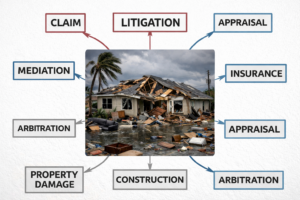
Florida’s first-party property litigation landscape has changed dramatically over the past few years. Pre-suit requirements are stricter, fee shifting has almost disappeared and summary judgment is elusive at best. These changes have altered one central question: When is the right time to mediate? Unfortunately, there is no universal answer. Timing now depends on leverage, risk tolerance, and how fully the factual record has developed.

Mediation Before Appraisal

In disputes where coverage is admitted but scope and pricing are contested, early mediation can still work. Particularly where both sides recognize that appraisal is inevitable, mediation can frame parameters and narrow issues before additional costs are incurred.

However, when causation is disputed, appraisal may not resolve the true conflict. As clarified in Johnson v. Nationwide Mutual Insurance Co., 828 So. 2d 1021 (Fla. 2002), coverage issues remain judicial questions. Mediation before those issues crystallize may result in positional bargaining rather than a meaningful risk analysis that could lead to settlement.

Strategic takeaway: Early mediation works best when the dispute is economic, not legal.

The DFS Mediation Program: An inexpensive and commonly misunderstood option

Florida’s Department of Financial Services administers a voluntary mediation program under §627.7015 for personal lines and commercial residential property insurance claims. It is available before appraisal or litigation, the insurer bears the cost, and insurers are required to notify policyholders of the program when a claim is filed. DFS mediation under §627.7015 is a voluntary option. What is mandatory is the pre-suit notice of intent to initiate litigation under §627.70152, which requires the claimant to file a notice with the DFS at least 10 business days before filing suit. A recent case notes that this notice of intent can also be retroactive. See generally Universal Property and Casualty v. Griffin, 51 Fla. L. Weekly D352B  (4th DCA 2026).  The insurer must respond in writing within that window, either with a settlement offer or a demand for appraisal. That is a notice-and-response requirement, not a mediation requirement.

The distinction matters strategically. In a DFS Mediation, if a settlement is reached, the policyholder has three business days to rescind assuming certain parameters are met. But the process is informal, conducted through DFS-appointed mediators, and designed to resolve disputes without adversarial proceedings. For straightforward scope-and-pricing disputes, particularly in personal residential claims, it can produce early resolution at minimal cost.

However, DFS mediation usually occurs before the factual record has been fully developed. There are usually no depositions, expert reports, and no litigation pressure driving the insurer’s evaluation. For complex claims or disputes involving causation, the program often lacks the information density needed for meaningful negotiation or resolution.

Strategic takeaway: DFS mediation is a useful early option for straightforward disputes, but counsel should not confuse it with a pre-suit requirement or treat it as a substitute for litigation-stage mediation in complex cases.

Mediation After Key Depositions

Adjuster, expert, corporate representative and claimant depositions frequently shift settlement value. When testimony clarifies claim handling decisions or exposes weaknesses in expert opinions, parties can reassess risk. Under Florida’s alignment with the federal summary judgment standard FRCP 1.510, trial risk has increased. A well-timed mediation after fact depositions but before expensive expert discovery often produces the most rational evaluation.

Strategic takeaway: Mediate when uncertainty narrows but before costs escalate.

Mediation During the Civil Remedy Notice Period

Section 624.155(3)(d) creates a 60-day cure window. As explained in Talat Enterprises, Inc. v. Aetna Casualty & Surety Co., 753 So. 2d 1278 (Fla. 2000), the insurer’s payment of contractual damages within that window can preclude a statutory bad faith action. Mediation during this window can be powerful. It allows both sides to explore resolution without committing to entrenched litigation strategy.

Strategic takeaway: CRN-period mediations require a fully developed factual presentation.

Post-Summary Judgment Hearing

The 2021 summary judgment standard has increased judicial willingness to resolve coverage disputes pre-trial. A pending dispositive motion often creates the sharpest settlement clarity. If the ruling defines the case’s trajectory, mediation immediately before the hearing can avoid unnecessary appellate risk. If the ruling will likely deny relief, mediation immediately can recalibrate expectations.

Strategic takeaway: Summary judgment deadlines create natural settlement inflection points.

The Economic Reality After Fee Reform

With the repeal of §627.428 through House Bill 837 (2023), both plaintiffs and carriers evaluate cases differently. Without one-way fees, plaintiffs must weigh litigation costs against potential net recovery. Carriers evaluate defense spending against exposure without automatic fee multipliers. This economic shift makes mediation more effective when both sides have concrete budgets and litigation forecasts, not speculative projections.

Strategic takeaway: Both sides need to understand their true economic impacts to make the most of mediation.

The Mediator’s Role in Timing

Timing is not merely procedural; it also has an economic and psychological impact. Early mediations often test credibility and assessment systems. Mid-case mediations test endurance. Late mediations test risk tolerance and trial strategies.

The most productive sessions occur when the parties understand their evidentiary strengths and weaknesses, the legal issues are framed but not conclusively decided, and litigation costs have become real but not yet irretrievable. In today’s Florida property litigation environment, mediation is most effective when it follows strategic development rather than procedural scheduling.

Conclusion

There is no universally “correct” moment to mediate a first-party property case. But there are clearly identifiable leverage points.

  • Early for economic disputes.
  • Mid-case for factual clarity.
  • Pre- or post-summary judgment for legal distinction.

Understanding those phases allows counsel to use mediation not as a docket event, but as a deliberate strategy.​​​​​​​​​​​​​​​​

Mediation in Florida is a decision event, not just a docket event.

Florida’s court ordered mediation framework is designed to encourage a real settlement conversation while parties can still control the outcome. When lawyers treat mediation as a procedural checkpoint or just something that must be done in the early stages of a case, the session predictably becomes performative and ineffective. The result is often an “impasse” that leads to additional litigation and costs that could have been avoided. These cases will frequently settle, but later in litigation after additional costs and time are spent- that could have been avoided. Florida courts and legal commentators have long emphasized that mediation is party driven, and that “impasse” is not the only off ramp when the room is close to a settlement but still stuck in certain positions[1]. While there are common mistakes and problems that occur in mediation, there are also solutions to these issues that can still lead to a productive settlement.

The 1st and most common mistake is arriving without a clear understanding of what it will take for a party to settle or without the people who hold the authority to settle.

In Florida civil cases, parties and their required representatives are expected to attend with authority consistent with the court’s order and the mediation rules. When the “real” decision maker is absent, or authority is limited to a number that cannot move past a certain point, the session becomes an exercise in futility. The parties and/or representatives at the mediation can no longer truly continue to negotiate as they are limited. Florida appellate courts have repeatedly upheld sanctions for failure to appear at mediation without good cause and have treated “appearance” and compliance as serious obligations, not just formalities. See Fla. R. Civ. P. 1.720 (2026); Carbino v. Ward, 801 So. 2d 1028 (Fla. 5th DCA 2001);  Physicians Protective Tr. v. Overman, 636 So. 2d 827 (Fla. 2d DCA 1994); Alvarez v. Citizens Prop. Ins. Corp., 325 So.3d 231 (Fla. App. 2021). Even technical mistakes such as filing a certificate of authority untimely can lead to sanctions but not necessarily a dismissal. See H & R Block Bank v. Perry, 205 So.3d 776 (Fla. App. 2016).

The practical takeaway from a review of these cases is simple. If authority is complicated, have a plan at the ready: Follow the rules as to what may be required, confirm who is attending and what authority they hold, and how additional authority will be obtained if needed.

The 2nd most common mistake is negotiating without a valuation model that the client understands.

Parties cannot and do not settle what they cannot value or understand. This shows up in every practice area, but it is especially acute in personal injury, employment, construction, property damage, and commercial cases where risk assessment depends on incomplete facts, competing experts, and subjective facts such as juror temperament or social influences. Mediation literature and research have noted that principled negotiation works best when parties separate people from the problem and rely on objective criteria rather than emotion or escalation.[2] That core framework remains the most practical antidote to positional bargaining in a Florida mediation room.

The 3rd mistake is ignoring Florida’s confidentiality and privilege structure, then trying to litigate around it later.

Florida’s Mediation Confidentiality and Privilege Act provides broad confidentiality and privilege protections for mediation communications, with statutory remedies for knowing and willful violations.[3] Florida court decisions also explain why this protection exists and why it is continually enforced in Florida courts. Mediation “could not take place” if litigants feared that statements made during mediation would later be used as admissions against interest when settlement fails. See DR Lakes, Inc. v. Brandsmart U.S.A. of W. Palm Beach, 819 So. 2d 971 (Fla. 4th DCA 2002); Sun Harbor Homeowners’ Ass’n., Inc. v. Bonura, 95 So.3d 262 (Fla. App. 2012). This matters in practice. If a case turns on alleged mutual mistake, misrepresentation, or coercion, counsel must evaluate in advance what evidence will be available outside the confidentiality barrier. The instinct or desire to “prove what happened in mediation” is often legally unavailable or strategically self-defeating in Florida.[4]

The 4th mistake is leaving mediation with a deal “in principle,” then discovering it is not enforceable.

Florida requires endurance and discipline at the finish line of a mediation. Parties regularly assume that emails, term sheets, or handshake agreements may be enough to enforce an agreement allegedly reached at mediation. A settlement agreement is different from a release, final judgment, or other dismissal documents. The settlement agreement memorializes, in writing, the terms that the parties agree on to reach a resolution of the dispute in mediation. While the settlement agreement may reference other terms that must be met after mediation, it must memorialize the key terms agreed upon in mediation and it must be signed by the parties for it to be enforceable. Florida appellate courts have been clear that mediated settlement agreements must comply with the procedural requirements applicable to mediation settlements. Case law on this issue is also instructive. In Parkland Condo. Association, Inc. v. Henderson, the court held the settlement unenforceable because it resulted from mediation yet lacked the required signatures under the rule.[5] In family cases, mediated settlement agreements are also frequently attacked after the fact, often based on pressure narratives, incomplete disclosure, or buyer’s remorse. Florida courts routinely analyze whether the agreement should stand, and whether the challenge is supported by legally sufficient grounds rather than regret.[6] The practical rule to follow is to come into mediation with a draft settlement agreement or perhaps terms that a party wishes to have in it so you have it ready for review if you reach a settlement. Then, if you reach a deal in mediation, you are ready to reduce it to a complete written agreement that the parties all agree to and obtain the signatures required by the governing rule before anyone leaves. This is the safest and most effective way to avoid the dreaded “settlement remorse” which can undo carefully negotiated verbal agreements after the parties have left the mediation.

The 5th Mistake: When discussions are failing, Florida lawyers can use “adjournment” as a way to avoid “impasse.” Sometimes, a little bit of time can make a world of difference.

Florida’s mediation culture sometimes treats “impasse” as a clean ending, but it is not always the best ending. “Adjournment” or temporarily pausing the mediation can give the parties a bit of breathing room and time to review additional options. See Fla. R. Civ. P. 1.7120; Fla. R. Civ. P. 1.710(a). The most efficient way to use this option is to have a structured adjournment with a written continuation plan and a set ending date or time. That plan can identify what information is missing, who will provide it, and by what date. It should also be confirmed whether the parties will reconvene for a shorter second session with parties present, whether the mediator will conduct follow-up caucuses by phone or video, and whether last offers will remain open for a defined window. Adjournment can work when there is a clear end to additional efforts for negotiating. Another similar option – rescheduling or continuing the mediation to an additional day and time with parties present- is also often superior to declaring impasse when the barrier is fixable within days or weeks. Scenarios where this is possible include a pending expert opinion, lien confirmation, a coverage position, a key corporate approval, or final financial disclosures. Sometimes, once information like this is secured, a settlement is more likely. Thus, a continuation of the mediation can result in a more likely chance of settlement.

The hardest truth: A rushed ending can result in continued or future litigation.

If a case does not settle, the way it ends matters. If a case does settle, the way it is documented matters more. Florida courts have reversed overreaching sanctions in the mediation context when the trial court’s response did not fit the transgression, which is another reminder that mediation is procedural, but it is not casual. See H & R Block Bank v. Perry, 205 So.3d 776 (Fla. App. 2016). And when parties breach mediated settlement terms, Florida appellate decisions recognize that sanctions and enforcement mechanisms depend on the procedural posture and the governing rules. See Cox v. Great American Ins. Co., 88 So. 3d 1048 (Fla. 4th DCA 2012).

The Florida mediation mistakes and problems that cost the most are rarely about a difficult or stubborn opposing party. They are usually preventable issues: lack of authority, valuation ambiguity, client misunderstanding, unenforceable agreements, and an avoidable rush to “impasse” when an adjournment or reschedule would have preserved momentum and produced a deal. At Endeavor Mediation, we have experience in dealing with these issues and can assist in parties reaching a settlement even when it looks impossible.


____________________

[1] See generally Fran L. Tetunic, Mediation Myths and Urban Legends, Fla.B.J., May 2008, Vol. 82, No. 5 at 52; https://www.floridabar.org/the-florida-bar-journal/mediation-myths-and-urban-legends/

[2] The Program on Negotiation, Harvard Law School, “What is Principled Negotiation?”; https://www.pon.harvard.edu/tag/principled-negotiation/; Fisher, Roger, William Ury, and Bruce Patton. 2006. Getting to Yes, 2nd ed. New York, NY: Penguin Putnam

[3] § 44.401-406, Fla. Stat. (2025) ; https://www.flsenate.gov/Laws/Statutes/2025/Chapter44/All

[4] Maria S. Cohen, The Mediation Privilege, Fla.B.J. April 2013 Vol.87, No. 4 at 14.

[5]See Fla. R. Civ. P. 1.730 (2026); Parkland Condo. Ass’n., Inc. v. Henderson, 350 So.3d 484 (Fla. App. 2022); Dean v. Rutherford Mulhall, P.A., 16 So.3d 284 (Fla. App. 2009); Gardner v. Wolfe & Goldstein, P.A., 168 So.3d 1281(Fla. App. 2015); Mastec, Inc. v. Cue, 994 So.2d 494 (Fla. 3d DCA 2008); Fla. Stat. § 44.404.

[6]See Crupi v. Crupi, 784 So. 2d 611 (Fla. 5th DCA 2001); Gutierrez v. Gutierrez, 248 So.3d 271 (Fla. 3d DCA  2018).

As long as I can remember, the central question in each of the cases I handled on the civil side was “What is the value of this case? What would a jury award if it goes to trial?” As a mediator, I encounter this question every day, and since none of us can truly foresee what lies ahead, the answer remains uncertain. And to add another wrinkle of complication – settlement value – can be and is different – from what a jury or a judge may ultimately award. Assessing settlement value is challenging in any jurisdiction, to be sure. Yet our beautiful state of Florida adds additional layers of complexity that experienced trial lawyers encounter daily. Venue variability, economic disparities, jury discretion, evolving statutory frameworks, and procedural pressures all shape how cases resolve in practice in each geographic area. Across personal injury, property damage, employment, and construction disputes, settlement assessment requires more than just legal analysis. It requires an understanding of how Florida litigation actually functions on the ground and how it can change daily depending on what is happening in this state.

Florida is not a uniform litigation environment: Outcomes can vary significantly depending on where a case is tried. After not only having lived in various parts of this state, but also handled matters venued throughout its various and vastly different counties – it is a true statement to say that a case in Key Largo, FL will not be the same case in Niceville, FL. A matter venued in Miami-Dade, Palm Beach or Hillsborough may present a very different risk and valuation profile than the same case tried in Pinellas, Pasco, Escambia or Duval. Jury composition, local norms, and historical verdict patterns all influence how claims are received. In personal injury cases, perceptions of non-economic damages often differ substantially across venues. In employment litigation, attitudes toward employers, retaliation claims, and workplace policies vary by county and sometimes even by neighborhood. Construction disputes may be shaped by local familiarity with development projects, contractors, insurers, and the practical realities of large-scale construction. When settlement discussions rely on verdicts or expectations drawn from dissimilar venues, expectations can drift unless those differences are addressed directly.

Jury discretion further complicates settlement assessment in Florida: Jurors retain broad authority in determining damages, assessing credibility, and weighing expert testimony. In personal injury matters, even carefully developed medical causation evidence may be discounted or amplified depending on how a plaintiff is perceived. Property damage cases often turn on competing expert opinions regarding scope, causation, and repair methodology, with outcomes driven less by technical precision than by which narrative resonates most. Employment cases frequently hinge on credibility and storytelling rather than strict legal compliance. Construction disputes can involve complex schedules, change orders, and defect causation that are difficult for juries to fully absorb or understand, increasing outcome variability. Strong advocacy does not eliminate this uncertainty. It exists alongside it.

Florida’s statutory and procedural landscape also plays a meaningful role: Recent changes in comparative fault standards, attorney’s fee provisions, notice requirements, and presuit obligations continue to affect exposure and leverage, particularly in personal injury and property insurance litigation. In property damage cases, coverage disputes, appraisal outcomes, and policy interpretation can materially alter exposure well into the life of a case. Construction claims are frequently shaped by lien rights, notice compliance, and contractual dispute resolution provisions. Employment cases often involve administrative prerequisites and fee-shifting frameworks that influence risk on both sides. Settlement assessment benefits from revisiting these factors as cases evolve rather than assuming early evaluations remain fixed.

Emotion and personal investment are ever-present in Florida litigation: Injured plaintiffs may experience settlement discussions as failing to reflect the full impact of their injuries and lived experience. Florida’s expansive attorney advertising environment can also further shape expectations by anchoring values for claimants and jurors that differ sharply from how defendants (and insurers) assess exposure. Property owners may perceive disputes as challenges to their credibility or personal integrity. Employees frequently frame claims around dignity and fairness, not solely financial recovery. Contractors and developers may prioritize reputation, precedent, and the effect of outcomes on future business relationships. These perspectives are not only understandable, they also shape how risk is perceived and how proposals are received, particularly as litigation fatigue accumulates over time. Some Florida cases develop heightened conflict that further complicates resolution. Coverage denials, contentious employment terminations, publicly visible construction failures, and prolonged delays can intensify emotions and entrench positions. In these matters, settlement discussions may become intertwined with control, validation, or narrative dominance rather than financial exposure alone. Progress often requires attention to patience, respect, process and communication, not just numbers.

Successful settlement is the result of careful review and assessment: More reliable settlement assessment in Florida practice often comes from grounding discussions in venue-appropriate reference points and revisiting assumptions as discovery, motion practice, and expert development unfold. Addressing emotional dynamics openly, rather than treating them as distractions, allows parties to engage more constructively with risk. When discussions slow during mediation, it is frequently useful to pause and identify what is driving hesitation. Sometimes the focus has narrowed to an early number. Sometimes concerns about precedent or signaling dominate. Sometimes uncertainty about a difficult outcome has not been fully examined. Allowing space to clarify assumptions and reframe options can restore momentum without pressure.

Resolution in Florida litigation is not about abandoning principles or demonstrating weakness. It is about choosing certainty over volatility in an environment where outcomes remain inherently unpredictable. Alternative dispute resolution, particularly mediation, allows parties to evaluate Florida-specific risks and decide how much uncertainty they are willing to carry forward. Successfully navigating difficult cases requires thoughtful, deliberate strategies that meet parties and counsel where they are, with genuine curiosity about the positions they hold and the interests driving them. From that starting point, creative negotiation techniques can help loosen entrenched positions and move discussions toward a more neutral and productive space. This shift allows for meaningful dialogue, preserves party self-determination, and opens the door to options that more accurately reflect each party’s true interests. Mindset can also greatly influence success in mediation – sometimes it is important to consider “not yet” as the best option moving forward, rather than focusing on “this will never settle” or “not ever.” While one party may believe that “impasse” is the only answer after a few hours in mediation, frequently success in mediation is found after taking a short break or taking a few days or even weeks to continue exploring settlement options. I frequently compare this to a puzzle or a Rubik’s cube- keep shifting the pieces with patience and deliberation until you can find a fit that works.

When settlement value is approached as a structured evaluation rather than an all-or-nothing contest, mediation becomes an opportunity for informed, deliberate choice and durable resolution.

Last month I discussed observations about a seminar during a recent local Bench and Bar conference hosted by the Hillsborough County Bar Association. Among the many excellent seminars, one stood out to me in particular: a panel of jurors who had served on various civil trials in Hillsborough County. They had returned for the conference to discuss what they had considered important in the trials they had participated in and why they had come to the conclusions they did. As they discussed the observations, evidence and arguments they found most persuasive in reaching their verdicts, I was reminded that success in litigation and trial is as much an art as it is a calculated presentation of the evidence available to counsel and their client. The following is part 2 of this blog post, and now we will explore how jurors are persuaded by evidence and which types of evidence are most successful in our increasingly fast passed society.

Part 2: What Kind of Evidence Do Juries Find Persuasive?

When a jury walks into the box, they bring with them cognitive shortcuts, impressions of credibility, and narrative expectations. Persuasion in a jury trial is not simply about piling on more evidence; rather, it is about how the evidence is presented, which evidence resonates most, and who presents it.

Evidence Hierarchies from the Juror’s Lens

In empirical and mock-juror studies, some evidence types consistently rise to the top of juror credibility rankings. For example, in a widely cited study, Kimberly Schweitzer and Narina Nuez found that mock jurors ranked DNA evidence as the most compelling type of proof, followed by fingerprints, weapons, crime-scene photos, video recordings, gunshot residue, and bodily fluids.[1] In this study, expert testimony and eyewitness testimony was considered the least reliable. This is fascinating, considering that many cases are developed and tried based on the evidence that witnesses, especially expert witnesses, provide. Other work shows that jurors can differentiate between strong and weak versions of forensic evidence, especially when properly contextualized (e.g. DNA matching with low error bounds).[2] However, jurors are also susceptible to overconfidence in complex scientific or forensic claims. Some research warns that jurors may equate “technical” with “true,” even when error rates or method limitations exist.[3] Moreover, the so-called “Wells effect” warns of a psychological gap: jurors may resist pure statistical or “naked probability” evidence unless it is woven into a fact narrative they can grasp.[4] In addition, the “CSI effect” jurors, influenced by popular TV crime dramas, may expect or overvalue forensic and scientific evidence—even demanding it where none exists.[5]

In short: jurors love tangible, concrete, scientific or visual evidence (DNA, fingerprint, high-quality video) built into a compelling story. But they are not strictly rational Bayesian calculators; they evaluate through narrative context, credibility, and coherence of theory and argument as presented by the attorneys.

Live Testimony and Video (or Recorded) Testimony

Live testimony and recorded (or video) testimony each carry advantages and pitfalls, and jurors respond differently to them.

Live Testimony

  • Demeanor, confidence, and presence: Jurors heavily weigh the demeanor of a live witness—confidence, eye contact, and composure. Indeed, some studies suggest jurors’ perception of witness confidence often trumps consistency in their credibility judgments.[6] But researchers caution- demeanor is a poor predictor of truthfulness. A polished liar can appear credible while a truthful but anxious witness may falter. It is worthwhile to examine the jury’s judgement hierarchies about the behavior of others during void dire to determine how strictly they will judge the credibility of a witness based on their demeanor or attire.
  • Cross-examination exposure: Live witnesses can be tested on inconsistencies, impeached, challenged on tone, and forced into unplanned responses—this dynamic can sway jurors based on how well defense or plaintiff counsel handles live cross examination. In addition, jurors must rely on their own short-term memory and note-taking; sometimes they lose track of details over the course of testimony and deliberation.

Video or Recorded Testimony

Use of video testimony or deposition excerpts can provide a level playing field (no dress, lighting, physical presence variations) and preserve consistent delivery. For witnesses who are unavailable in person (e.g. due to health, security or travel issues), video gives the jury a chance to see facial expressions, pauses, and tone- rather than just reading a transcript. Some empirical work suggests that whether testimony is delivered live or by video does not always significantly impact liability judgments, especially if the substance and narrative remain the same.[7] However, jurors may view video testimony as less immediate, less under oath oversight, or less “real”—they may discount it slightly unless the video is compelling in quality and presentation. From a practical standpoint, a hybrid approach sometimes works: live testimony when possible, and strategically selected video clips or demonstratives to reinforce key moments.

Demonstrative Evidence, Audio-Visual Aids, and Storytelling

Demonstratives and audio/visual aids are powerful tools to transform abstract or complex data into digestible visuals, reinforce themes, and invite juror self-persuasion. During the bar conference, jurors on the panel repeatedly mentioned how persuasive visual aids were in helping them come to their particular decision about the case. Further, in an era where the fight for our attention is ongoing and the average attention span is a mere 8 seconds or so, it is important to present evidence in all of the forms and formats available to grab AND maintain the jury’s attention – both auditory and visual.[8]

“Persuasion science” tells us that people are more convinced by conclusions they arrive at themselves rather than those they are told. Thus, letting jurors infer from a chart, animation, or timeline can be more powerful than walking them through each step verbally.[9] Narrative aids such as timelines, maps, accident reconstructions, simulations, animations, and graphic overlays help jurors integrate evidence into a coherent story. A good demonstrative “shows” what the attorney wants jurors to see, not just hear. Overly verbose or detailed demonstrations can distract or antagonize jurors. One article argues: “If there is demonstrative evidence that can tell a story, show it … with only as much description as is needed so they know what they’re looking at.”[10] Jurors are processing large amounts of testimony and facts. Visual aids can relieve the cognitive load, enabling jurors to “see the forest” as well as “see the trees.” As courts increasingly confront algorithms, bullet-matching analyses, or probabilistic models, the way demonstratives present uncertainty and error rates matters. Ultimately, when designed cleanly, anchored to the fact narrative, and used sparingly as “jury aides” rather than substitutes for persuasion, demonstrative materials can be among the most convincing tools in the trial lawyer’s kit.

How Jurors View Attorneys — Why Preparation & Professionalism Matter

Evidence matters, but the messenger matters too. How jurors perceive attorneys—credibility, competence, demeanor—can tip close cases. During the conference, this was another topic that came up again and again with the jurors present- they mentioned how they trusted attorneys that appeared prepared, composed and polished. And they ignored the arguments of attorneys that appeared unprepared, confused or disheveled. While this may seem unfair, it is important to understand the playing field one finds themselves in and understand that they will be judged by the rules on that field.

The Impact of Attorney Perceptions

In a study of 572 jurors, Wood, Sicafuse, Miller & Chomos found that jurors’ positive perceptions of attorneys’ evidence presentation and preparedness predicted favorable verdicts.[11] Interestingly, for prosecuting/plaintiff attorneys, a favorable closing statement perception correlated with verdict success; but for defense attorneys, a favorable opening sometimes correlated with less success—suggesting tactical nuance. [12]Jurors’ perceptions of attorney sincerity had complex correlations: in that study, higher perceived sincerity of the prosecution was negatively correlated with favorable verdicts—perhaps because jurors distrust over-polished sincerity.[13]

A qualitative juror survey in Baylor’s “Professionalism and Advocacy at Trial” found that jurors valued attorneys who believed in their case, understood both strengths and weaknesses, brought up incriminating facts before opposing counsel did, and were honest with the jury at all times.[14] The expression of anger or emotional intensity is double-edged: a 2023 study showed that specially scripted “angry” closing statements (authentic or inauthentic) affected juror decisions. The effect interacted with attorney gender, highlighting that emotional expression must be calibrated.[15]

In sum: the attorney is not invisible. Jurors assess: Are you confident yet humble? Prepared but flexible? Sincere? Respectful of the jury? These are all of the questions and thoughts that are running through the jury’s mind. Thus, an overreaching expression or sloppy presentation can backfire.

Preparation, Professionalism & Persuasion

Given that jurors form impressions early and carry them forward, trial counsel should treat professionalism and preparation as persuasion tools that are at their disposal:

  1. Know your audience: Understand the demographic and attitudinal profile of jurors: what narratives, analogies, or themes will resonate? Use focus groups and mock jurors in your preparation.
  2. Meticulous rehearsal: Script and rehearse openings, transitions, and key questions—not to memorize, but to internalize rhythm and clarity. Review demonstrative evidence and/or aides under multiple lighting/media conditions to test their applicability and use. It is important to attempt to prepare for any technological issues as well- a delay in getting the PowerPoint or computer to work can not only frazzle nerve but also hint to the jury lack of preparation.
  3. Visual consistency and stylistic coherence: Use a unified aesthetic (fonts, colors, visual metaphor) across slides, graphs, charts, timelines, maps. Disjointed visuals fragment attention.
  4. Courtroom demeanor and juror respect: Dress and comport yourself with professionalism- neither overly stiff or casual. The jury will be expecting respect between the attorneys and also to themselves. Use juror-friendly language: avoid jargon, explain briefly, and periodically remind them what they are supposed to remember.
  5. Ethical credibility: Avoid exaggeration or overstatement. Jurors often “catch” misstatements or inconsistent claims- even minor ones. Once they catch something like this, it can lead them to not trust what the attorney is saying or presenting after. One of my mentors told me once to “Never issue a check with your mouth that you can’t cash after closing argument.” That phrase stayed with me during many a trial. Discussing weaknesses in your case strategically (e.g. in opening) by weaving them into your narrative so jurors see you are not hiding anything.

Conclusion

Persuading a jury is a multidimensional craft: you must present strong evidence, package it in digestible visual and auditory narratives, and deliver it through a messenger jurors find credible and respectful. Live testimony, video, and demonstratives each have roles; the key lies in integrating them into a coherent, juror-friendly narrative rather than dumping raw data. A polished, professional attorney who commands respect, reduces juror cognitive load, and encourages juror self-persuasion can often convert a “close” case into a winning outcome.


[1] What Evidence Matters to Jurors? The Prevalence and Importance of Different Homicide Trial Evidence to Mock Jurors;  Kimberly Schweitzer and Narina Nuñez; https://pmc.ncbi.nlm.nih.gov/articles/PMC6818361/

[2] Understanding juror perceptions of forensic evidence: investigating the impact of case context on perceptions of forensic evidence strength; Lisa L Smith, Ray Bull, Robyn Holliday; https://pubmed.ncbi.nlm.nih.gov/21210812/

[3] Juror comprehension of forensic expert testimony: A literature review and gap analysis; Heidi Eldridge; https://www.sciencedirect.com/science/article/pii/S2589871X19300683?

[4] Elsevier’s Dictionary of Psychological Theories, edited by J.E. Roeckelein, 2006; citing G.L. Wells theory, (1978); https://books.google.com/books?id=1Yn6NZgxvssC&pg=PA627#v=onepage&q&f=false

[5] Willing, Richard: “‘CSI effect’ has juries wanting more evidence,” August 5, 2004, USA Today;  http://usatoday30.usatoday.com/news/nation/2004-08-05-csi-effect_x.htm%7Cpublisher=USA Today

[6] The Changing Science on Memory and Demeanor – and What It Means for Trial Judges, Mark Bennett; Vol. 101 No. 4 (2017); https://judicature.duke.edu/articles/the-changing-science-on-memory-and-demeanor-and-what-it-means-for-trial-judges/

[7] The effect of expert witness testimony and complainant cognitive statements on mock jurors’ perceptions of rape trial testimony, Nathan Ryan and Nina Westera, Psychiatry, Psychology and Law, June 2018; https://pmc.ncbi.nlm.nih.gov/articles/PMC6818329/

[8] Speaking of Psychology with Gloria Marks, February 2023; https://www.apa.org/news/podcasts/speaking-of-psychology/attention-spans; Stolen Focus: Why You Can’t Pay Attention by Johann Hari, 2024, https://stolenfocusbook.com/

[9] Persuasion Science for Trial Lawyers, December 2021, John Blumberg; https://www.persuasion-science.com/; https://law.temple.edu/aer/2022/10/24/persuasion-science-for-trial-lawyers/

[10] The psychological science of jury persuasion; Plaintiff Magazine, November 2017, John Blumberg; https://plaintiffmagazine.com/recent-issues/item/the-psychological-science-of-jury-persuasion

[11] The Influence of Jurors’ Perceptions of Attorneys and Their Performance on Verdict

by Steve M. Wood, Lori Sicafuse, Monica K. Miller, Ph.D., and Julianna C. Chomos; The Jury Expert, January 2011, https://thejuryexpert.com/2011/01/the-influence-of-jurors-perceptions-of-attorneys-and-their-performance-on-verdict

[12] The Influence of Jurors’ Perceptions of Attorneys and Their Performance on Verdict

by Steve M. Wood, Lori Sicafuse, Monica K. Miller, Ph.D., and Julianna C. Chomos; The Jury Expert, January 2011, https://thejuryexpert.com/2011/01/the-influence-of-jurors-perceptions-of-attorneys-and-their-performance-on-verdict

[13] The Influence of Jurors’ Perceptions of Attorneys and Their Performance on Verdict

by Steve M. Wood, Lori Sicafuse, Monica K. Miller, Ph.D., and Julianna C. Chomos; The Jury Expert, January 2011, https://thejuryexpert.com/2011/01/the-influence-of-jurors-perceptions-of-attorneys-and-their-performance-on-verdict

[14] Professionalism and Advocacy at Trial – Real Jurors speak in detail about the performance of their advocates; Baylor Law Review, March 2012, Mitchell J. Frank* & Dr. Osvaldo F. Morer; https://www.baylor.edu/content/services/document.php/176863.pdf

[15] The influence of attorney anger on juror decision making, Samuel Choi, Narina Nuñez, Benjamin M Wilkowski, Psychiatry, Psychology and Law, February 2022; https://pmc.ncbi.nlm.nih.gov/articles/PMC10281436

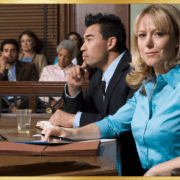
I recently had the good fortune to attend the Hillsborough County Bar Association’s Annual Bench and Bar Conference in early October. Among the many excellent seminars, one stood out to me in particular: a panel of jurors who had served on various civil trials in Hillsborough County. They had returned for the conference to discuss what they had considered important in the trials they had participated in and why they had come to the conclusions they did. As they discussed the observations, evidence and arguments they found most persuasive in reaching their verdicts, I was reminded that success in litigation and trial is as much an art as it is a calculated presentation of the evidence available to counsel and their client. In this two-part blog post, we will explore how nonverbal communication from the attorneys and the parties can influence litigation from the opening stages of a case through to the verdict and the types of evidence juries find most compelling.

Part 1: The Art and Science of Nonverbal Communication

Quick Thinking, Nonverbal Command, and the Advocate’s Presence

When most lawyers think about persuasion in litigation or trial, they focus on arguments, evidence, and the precise words spoken to the Court. But persuasion operates on more than just the conscious, rational level. Body language and subconscious cues influence parties, jurors, and even judges, sometimes more powerfully than a closing argument. Albert Mehrabian’s foundational research in communication theory is often cited for the idea that the majority of meaning in face-to-face communication comes not from words, but from tone and body language.[1]  Additional studies have confirmed that nonverbal cues shape how listeners perceive credibility, confidence, and trustworthiness.[2] Becoming aware of how you are communicating with others nonverbally can make a difference in how you (and your arguments) are perceived.

Malcolm Gladwell’s Blink expands on this phenomenon, describing how people form intuitive judgments in seconds—a process he calls “thin-slicing.”[3] In the courtroom, jurors are continually “thin-slicing” advocates, witnesses, and parties based on fleeting cues: a pause before answering, a crossed arm, a flicker of irritation. These are the “tells” that their subconscious minds are looking for to confirm or discredit their opinions and/or pre-conceived notions. Once formed, these impressions are remarkably resilient. Trial lawyers who understand this can use deliberate posture, pacing, and tone to project credibility and calm even when under stress.

In Outliers, Gladwell adds that elite performance often arises not from innate genius but from deliberate, repeated quality practice.[4] Quick thinking in trial, the ability to object smoothly, pivot on cross, or adapt to a judge’s question, depends on hours of structured rehearsal. The advocate who practices under pressure gains the intuitive mastery to make rapid decisions that feel instinctive to the jury.

Philip Meyer’s Storytelling for Lawyers offers a complementary insight: jurors interpret evidence through the story that feels most coherent.[5] Cognitive biases push people toward narratives that “fit.” When facts are organized into a clear, emotionally and visually consistent story, jurors experience less cognitive dissonance and are more likely to find the storyteller credible. Lawyers should therefore align their nonverbal communication with the story they are telling: calm tone for reason, measured movement for logic, warmth for empathy. Similarly, Brian Johnson and Marsha Hunter’s The Articulate Advocate reminds us that nonverbal delivery is the final layer of persuasion.[6] Vocal cadence, breathing, and stance all signal composure. Jurors (and other decision makers) equate these physical cues with sincerity and preparation, which in turn reinforce their subconscious judgment that the advocate is trustworthy. A trial lawyer’s ability to control their own body language, and read others’, can create subtle but real advantages:

  • Confidence and credibility. Research in legal psychology finds that refined appearance, upright posture, steady eye contact, and measured speech increase perceptions of trustworthiness.[7]
  • Storytelling through gesture. Gestures that mirror or emphasize verbal arguments help jurors retain key points.[8]
  • Detecting deception. While no signal guarantees truth or falsehood, inconsistencies between verbal statements and body language often alert jurors and judges to credibility issues.[9]

Persuasion begins long before closing argument. It begins in milliseconds- with a glance, a gesture, or the quiet confidence that jurors interpret as truth.

Subconscious Thinking and Cognitive Biases

Body language operates alongside subconscious mental shortcuts, or cognitive biases, that affect decision-making. Research by Daniel Kahneman in Thinking, Fast and Slow, and behavioral economists highlights how people rely on heuristics, availability, anchoring, confirmation bias, when making judgments.[10]

  • Authority bias: Jurors may unconsciously attribute more weight to testimony from a confident expert who appears composed and authoritative.
  • Halo effect: A likable party or witness (through warmth in demeanor or open posture) can influence jurors to see their testimony as more credible.
  • Anchoring: Discussion of case value in jury selection can subconsciously “anchor” the jury’s sense of reasonable outcomes, regardless of counterarguments.

Anchoring in Depositions and Testimony

Anchoring doesn’t just occur at the trial stage; it plays a powerful role during depositions and live testimony. Anchoring occurs when the first figure, fact, or framework presented exerts an outsized influence on subsequent perceptions, even if it is arbitrary.[11]

  • Depositions. When an attorney introduces an early numerical estimate (e.g., damages, timelines, percentages of fault), it can subtly set the reference point for the witness, opposing counsel, and even the judge reviewing the transcript later. Research in negotiation shows that first offers, even aggressive ones, tend to pull final outcomes closer to the anchor.[12]
  • Witness testimony. A plaintiff testifying that their medical bills were “over $100,000” anchors jurors, even if the defense later emphasizes a smaller reimbursable portion. Similarly, an expert who explains an injury will reduce life expectancy “by at least 15 years” has set a mental baseline that jurors carry into deliberation.
  • Cross-examination. Defense lawyers may use anchoring by posing questions with embedded figures: “Would you agree that many back injuries resolve within six months?” Even if the witness disputes the timeframe, the six-month figure becomes a subconscious benchmark.

Effective trial lawyers focus on tactics such as:

  • Set the anchor first whenever possible, framing damages or timelines in ways favorable to their client.
  • Challenge anchors overtly. Jurors are less likely to be unconsciously influenced if opposing counsel explicitly calls out an anchor as misleading or speculative.
  • Train witnesses. Prepare clients to avoid unintentionally reinforcing harmful anchors during deposition.

Anchoring operates quietly, but once established, it is notoriously difficult to dislodge, making it one of the most potent psychological tools in the trial lawyer’s arsenal.

Florida Courts and Subconscious Persuasion

Florida case law shows that courts are alert to the power of both nonverbal behavior and anchoring, even if they rarely use psychological terms.

  • In State v. DiGuilio, 491 So. 2d 1129 (Fla. 1986), the Florida Supreme Court noted that subtle cues, such as prosecutorial comments or gestures, can create unfair prejudice, underscoring how easily subconscious impressions can affect juror perceptions.
  • Florida appellate courts have also cautioned against “golden rule” arguments, which are essentially emotional anchors inviting jurors to put themselves in the plaintiff’s position (See Metropolitan Dade County v. Zapata, 601 So. 2d 239 (Fla. 3d DCA 1992)).
  • Federal courts sitting in Florida recognize similar concerns: in U.S. v. Schlei, 122 F.3d 944 (11th Cir. 1997), the court highlighted how prejudicial framing can sway juries beyond the evidence presented.

Beyond published opinions, Florida’s trial practice CLEs frequently emphasize the importance of demeanor, credibility, and the way questions are framed, echoing research on subconscious persuasion. For litigators practicing in Florida, this means being attuned not only to statutes and case law, but also to the subtle cues picked up by Florida jurors, who often come from diverse cultural and linguistic backgrounds. Body language and anchoring techniques that resonate in one county may land quite differently in another part of the state.

Influence on Judges and Opposing Parties

Even in bench trials, nonverbal cues matter. Judges, like all decision makers, are also subject to subconscious influences. Research shows judges, despite legal training, are not immune to cognitive biases like anchoring or framing effects.[13] In mediation or settlement negotiations, attorneys who display calm, open body language can reduce conflict intensity and promote trust. Subtle mirroring and adopting a posture similar to the opposing party has been shown to increase rapport and willingness to compromise.[14]

Practical Tips for Lawyers

  1. Control your posture and eye contact. Stand confidently, avoid crossing arms, and engage jurors or the judge with steady but not aggressive eye contact.
  2. Be aware of the influence of clothing and organization of materials for trials or hearings. Decision makers are looking at every single aspect they can, whether they realize it or not. This will include your clothing, physical appearance and even how organized your table might be in the courtoom. Refined and neat appearances often subtly suggest confidence and trustworthiness.
  3. Use intentional gestures. Don’t fidget—use your hands to underscore important points in your argument.
  4. Be mindful of micro-expressions. Jurors often sense disdain, irritation, or nervousness in a split second.
  5. Prepare your client and witnesses. Jurors notice when witnesses look evasive, avoid eye contact, or fidget. Roleplay in advance to help them feel composed.
  6. Be aware of subconscious framing. The order in which you present evidence, the first number you introduce, and the way you label parties (“plaintiff” vs. “injured mother”) can anchor perceptions powerfully.
  7. Use anchoring strategically in deposition. Be deliberate with the numbers you put on the record, knowing they’ll stick with both jurors and judges later.

Litigation is a battle that is composed not only of stories, facts, and law- but also of subtle signals and subconscious impressions. By integrating lessons from psychology, communication science, and behavioral economics, lawyers can sharpen their persuasive edge in ways that go beyond the transcript. As Daniel Kahneman, Malcolm Gladwell, and many other scholars remind us, much of human judgment is fast, intuitive, and subconscious. In litigation and trial, that means the decision makers, whether it is a judge, jury or opposing counsel and their client, may have made their decision long before you even imagined it was possible. These decisions were not made after the closing argument, but instead are based on the signals they pick up from every nod, glance, and gesture you provide through the litigation process and in the courtroom. Stay tuned for more as we dive into our second part to this blog post: where we will consider what evidence is most persuasive in litigation and trial and why how it is presented is often the most important aspect.

 _________________________________

REFERENCES & BIBLIOGRAPHY

[1] Silent Messages, Albert Mehrabian, 1971

[2]Burgoon, Guerrero & Floyd, Nonverbal Communication, 2016

[3] Blink: The Power of Thinking Without Thinking, Malcolm Gladwell, 2005

[4] Outliers, Malcolm Gladwell, 2008

[5] Storytelling for Lawyers, Philip N. Meyer, 2014

[6] The Articulate Advocate, Marsha Hunter, Brian Johnson, 2016

[7] Detecting Lies and Deceit, A. Vrij,  2008; What Every Body is Saying, Joe Navarro and Marvin Karlins, 2008; Cues: Master the Secret Language of Charismatic Communication, Vanessa Edwards, 2022

[8]  “How Gesture Promotes Learning and Thinking,” Goldin-Meadow, Trends in Cognitive Sciences, 2003

[9] Detecting Lies and Deceit, A. Vrij,  2008; What Every Body is Saying, Joe Navarro and Marvin Karlins, 2008; Cues: Master the Secret Language of Charismatic Communication, Vanessa Edwards, 2022

[10] Thinking, Fast and Slow, Daniel Kahneman, 2011

[11] “Judgment Under Uncertainty: Heuristics and Biases”, Tversky & Kahneman,  Science, 1974; Anchoring Effect in Real Litigation: An Empirical Study, Yun-chien Chang, Kong-Pin Chen, Chang-Ching Lin, Chicago Unbound, University of Chicago Law School, 2016

[12] “First Offers as Anchors,” Adam D. Galinsky and Thomas Mussweiler, Journal of Personality and Social Psychology, 2001

[13] “Inside the Judicial Mind,” Chris Guthrie, Jeffrey Rachlinski and Andrew Wistrich, Cornell Law Review, 2001

[14] “The Chameleon Effect,” T.L. Chartrand , J.A. Bargh, Journal of Personality and Social Psychology, 1999