I recently had the good fortune to attend the Hillsborough County Bar Association’s Annual Bench and Bar Conference in early October. Among the many excellent seminars, one stood out to me in particular: a panel of jurors who had served on various civil trials in Hillsborough County. They had returned for the conference to discuss what they had considered important in the trials they had participated in and why they had come to the conclusions they did. As they discussed the observations, evidence and arguments they found most persuasive in reaching their verdicts, I was reminded that success in litigation and trial is as much an art as it is a calculated presentation of the evidence available to counsel and their client. In this two-part blog post, we will explore how nonverbal communication from the attorneys and the parties can influence litigation from the opening stages of a case through to the verdict and the types of evidence juries find most compelling.

Part 1: The Art and Science of Nonverbal Communication

Quick Thinking, Nonverbal Command, and the Advocate’s Presence

When most lawyers think about persuasion in litigation or trial, they focus on arguments, evidence, and the precise words spoken to the Court. But persuasion operates on more than just the conscious, rational level. Body language and subconscious cues influence parties, jurors, and even judges, sometimes more powerfully than a closing argument. Albert Mehrabian’s foundational research in communication theory is often cited for the idea that the majority of meaning in face-to-face communication comes not from words, but from tone and body language.[1]  Additional studies have confirmed that nonverbal cues shape how listeners perceive credibility, confidence, and trustworthiness.[2] Becoming aware of how you are communicating with others nonverbally can make a difference in how you (and your arguments) are perceived.

Malcolm Gladwell’s Blink expands on this phenomenon, describing how people form intuitive judgments in seconds—a process he calls “thin-slicing.”[3] In the courtroom, jurors are continually “thin-slicing” advocates, witnesses, and parties based on fleeting cues: a pause before answering, a crossed arm, a flicker of irritation. These are the “tells” that their subconscious minds are looking for to confirm or discredit their opinions and/or pre-conceived notions. Once formed, these impressions are remarkably resilient. Trial lawyers who understand this can use deliberate posture, pacing, and tone to project credibility and calm even when under stress.

In Outliers, Gladwell adds that elite performance often arises not from innate genius but from deliberate, repeated quality practice.[4] Quick thinking in trial, the ability to object smoothly, pivot on cross, or adapt to a judge’s question, depends on hours of structured rehearsal. The advocate who practices under pressure gains the intuitive mastery to make rapid decisions that feel instinctive to the jury.

Philip Meyer’s Storytelling for Lawyers offers a complementary insight: jurors interpret evidence through the story that feels most coherent.[5] Cognitive biases push people toward narratives that “fit.” When facts are organized into a clear, emotionally and visually consistent story, jurors experience less cognitive dissonance and are more likely to find the storyteller credible. Lawyers should therefore align their nonverbal communication with the story they are telling: calm tone for reason, measured movement for logic, warmth for empathy. Similarly, Brian Johnson and Marsha Hunter’s The Articulate Advocate reminds us that nonverbal delivery is the final layer of persuasion.[6] Vocal cadence, breathing, and stance all signal composure. Jurors (and other decision makers) equate these physical cues with sincerity and preparation, which in turn reinforce their subconscious judgment that the advocate is trustworthy. A trial lawyer’s ability to control their own body language, and read others’, can create subtle but real advantages:

  • Confidence and credibility. Research in legal psychology finds that refined appearance, upright posture, steady eye contact, and measured speech increase perceptions of trustworthiness.[7]
  • Storytelling through gesture. Gestures that mirror or emphasize verbal arguments help jurors retain key points.[8]
  • Detecting deception. While no signal guarantees truth or falsehood, inconsistencies between verbal statements and body language often alert jurors and judges to credibility issues.[9]

Persuasion begins long before closing argument. It begins in milliseconds- with a glance, a gesture, or the quiet confidence that jurors interpret as truth.

Subconscious Thinking and Cognitive Biases

Body language operates alongside subconscious mental shortcuts, or cognitive biases, that affect decision-making. Research by Daniel Kahneman in Thinking, Fast and Slow, and behavioral economists highlights how people rely on heuristics, availability, anchoring, confirmation bias, when making judgments.[10]

  • Authority bias: Jurors may unconsciously attribute more weight to testimony from a confident expert who appears composed and authoritative.
  • Halo effect: A likable party or witness (through warmth in demeanor or open posture) can influence jurors to see their testimony as more credible.
  • Anchoring: Discussion of case value in jury selection can subconsciously “anchor” the jury’s sense of reasonable outcomes, regardless of counterarguments.

Anchoring in Depositions and Testimony

Anchoring doesn’t just occur at the trial stage; it plays a powerful role during depositions and live testimony. Anchoring occurs when the first figure, fact, or framework presented exerts an outsized influence on subsequent perceptions, even if it is arbitrary.[11]

  • Depositions. When an attorney introduces an early numerical estimate (e.g., damages, timelines, percentages of fault), it can subtly set the reference point for the witness, opposing counsel, and even the judge reviewing the transcript later. Research in negotiation shows that first offers, even aggressive ones, tend to pull final outcomes closer to the anchor.[12]
  • Witness testimony. A plaintiff testifying that their medical bills were “over $100,000” anchors jurors, even if the defense later emphasizes a smaller reimbursable portion. Similarly, an expert who explains an injury will reduce life expectancy “by at least 15 years” has set a mental baseline that jurors carry into deliberation.
  • Cross-examination. Defense lawyers may use anchoring by posing questions with embedded figures: “Would you agree that many back injuries resolve within six months?” Even if the witness disputes the timeframe, the six-month figure becomes a subconscious benchmark.

Effective trial lawyers focus on tactics such as:

  • Set the anchor first whenever possible, framing damages or timelines in ways favorable to their client.
  • Challenge anchors overtly. Jurors are less likely to be unconsciously influenced if opposing counsel explicitly calls out an anchor as misleading or speculative.
  • Train witnesses. Prepare clients to avoid unintentionally reinforcing harmful anchors during deposition.

Anchoring operates quietly, but once established, it is notoriously difficult to dislodge, making it one of the most potent psychological tools in the trial lawyer’s arsenal.

Florida Courts and Subconscious Persuasion

Florida case law shows that courts are alert to the power of both nonverbal behavior and anchoring, even if they rarely use psychological terms.

  • In State v. DiGuilio, 491 So. 2d 1129 (Fla. 1986), the Florida Supreme Court noted that subtle cues, such as prosecutorial comments or gestures, can create unfair prejudice, underscoring how easily subconscious impressions can affect juror perceptions.
  • Florida appellate courts have also cautioned against “golden rule” arguments, which are essentially emotional anchors inviting jurors to put themselves in the plaintiff’s position (See Metropolitan Dade County v. Zapata, 601 So. 2d 239 (Fla. 3d DCA 1992)).
  • Federal courts sitting in Florida recognize similar concerns: in U.S. v. Schlei, 122 F.3d 944 (11th Cir. 1997), the court highlighted how prejudicial framing can sway juries beyond the evidence presented.

Beyond published opinions, Florida’s trial practice CLEs frequently emphasize the importance of demeanor, credibility, and the way questions are framed, echoing research on subconscious persuasion. For litigators practicing in Florida, this means being attuned not only to statutes and case law, but also to the subtle cues picked up by Florida jurors, who often come from diverse cultural and linguistic backgrounds. Body language and anchoring techniques that resonate in one county may land quite differently in another part of the state.

Influence on Judges and Opposing Parties

Even in bench trials, nonverbal cues matter. Judges, like all decision makers, are also subject to subconscious influences. Research shows judges, despite legal training, are not immune to cognitive biases like anchoring or framing effects.[13] In mediation or settlement negotiations, attorneys who display calm, open body language can reduce conflict intensity and promote trust. Subtle mirroring and adopting a posture similar to the opposing party has been shown to increase rapport and willingness to compromise.[14]

Practical Tips for Lawyers

  1. Control your posture and eye contact. Stand confidently, avoid crossing arms, and engage jurors or the judge with steady but not aggressive eye contact.
  2. Be aware of the influence of clothing and organization of materials for trials or hearings. Decision makers are looking at every single aspect they can, whether they realize it or not. This will include your clothing, physical appearance and even how organized your table might be in the courtoom. Refined and neat appearances often subtly suggest confidence and trustworthiness.
  3. Use intentional gestures. Don’t fidget—use your hands to underscore important points in your argument.
  4. Be mindful of micro-expressions. Jurors often sense disdain, irritation, or nervousness in a split second.
  5. Prepare your client and witnesses. Jurors notice when witnesses look evasive, avoid eye contact, or fidget. Roleplay in advance to help them feel composed.
  6. Be aware of subconscious framing. The order in which you present evidence, the first number you introduce, and the way you label parties (“plaintiff” vs. “injured mother”) can anchor perceptions powerfully.
  7. Use anchoring strategically in deposition. Be deliberate with the numbers you put on the record, knowing they’ll stick with both jurors and judges later.

Litigation is a battle that is composed not only of stories, facts, and law- but also of subtle signals and subconscious impressions. By integrating lessons from psychology, communication science, and behavioral economics, lawyers can sharpen their persuasive edge in ways that go beyond the transcript. As Daniel Kahneman, Malcolm Gladwell, and many other scholars remind us, much of human judgment is fast, intuitive, and subconscious. In litigation and trial, that means the decision makers, whether it is a judge, jury or opposing counsel and their client, may have made their decision long before you even imagined it was possible. These decisions were not made after the closing argument, but instead are based on the signals they pick up from every nod, glance, and gesture you provide through the litigation process and in the courtroom. Stay tuned for more as we dive into our second part to this blog post: where we will consider what evidence is most persuasive in litigation and trial and why how it is presented is often the most important aspect.

 _________________________________

REFERENCES & BIBLIOGRAPHY

[1] Silent Messages, Albert Mehrabian, 1971

[2]Burgoon, Guerrero & Floyd, Nonverbal Communication, 2016

[3] Blink: The Power of Thinking Without Thinking, Malcolm Gladwell, 2005

[4] Outliers, Malcolm Gladwell, 2008

[5] Storytelling for Lawyers, Philip N. Meyer, 2014

[6] The Articulate Advocate, Marsha Hunter, Brian Johnson, 2016

[7] Detecting Lies and Deceit, A. Vrij,  2008; What Every Body is Saying, Joe Navarro and Marvin Karlins, 2008; Cues: Master the Secret Language of Charismatic Communication, Vanessa Edwards, 2022

[8]  “How Gesture Promotes Learning and Thinking,” Goldin-Meadow, Trends in Cognitive Sciences, 2003

[9] Detecting Lies and Deceit, A. Vrij,  2008; What Every Body is Saying, Joe Navarro and Marvin Karlins, 2008; Cues: Master the Secret Language of Charismatic Communication, Vanessa Edwards, 2022

[10] Thinking, Fast and Slow, Daniel Kahneman, 2011

[11] “Judgment Under Uncertainty: Heuristics and Biases”, Tversky & Kahneman,  Science, 1974; Anchoring Effect in Real Litigation: An Empirical Study, Yun-chien Chang, Kong-Pin Chen, Chang-Ching Lin, Chicago Unbound, University of Chicago Law School, 2016

[12] “First Offers as Anchors,” Adam D. Galinsky and Thomas Mussweiler, Journal of Personality and Social Psychology, 2001

[13] “Inside the Judicial Mind,” Chris Guthrie, Jeffrey Rachlinski and Andrew Wistrich, Cornell Law Review, 2001

[14] “The Chameleon Effect,” T.L. Chartrand , J.A. Bargh, Journal of Personality and Social Psychology, 1999

Divorce is rarely a simple event, instead it is frequently a process with multiple twists and turns. In Florida, where equitable distribution and time-sharing statutes govern many outcomes, preparation is one of the best predictors of a fair, calm and efficient resolution. Whether you anticipate mediation, collaborative law, or believe litigation is necessary, taking practical steps before filing can protect your rights, clarify your priorities, and reduce unnecessary conflict. In this blog post, I will review some concepts to consider as you review your options regarding separation and divorce.

Understand Your Legal Framework

Florida is a no-fault divorce state, meaning that either spouse can seek dissolution on the grounds that the marriage is “irretrievably broken.” However, equitable distribution under Florida Statute § 61.075 and time-sharing arrangements under § 61.13 still require evidence and preparation. Before taking action, consider consulting with a Florida Family Law attorney and review with them what you may need to do. You can also consider some of the following concepts as you go through the process:

  • Review whether you meet the six-month residency requirement for filing.
  • Consult with a Florida family law attorney to understand options such as mediation, collaborative divorce, or traditional litigation.
  • Familiarize yourself with mandatory disclosure rules, including financial affidavits and discovery deadlines.
  • For additional information, you can review the Florida Bar Family Law Handbook at Florida Bar Family Law Handbook. You can also review Florida family law forms, including petitions, financial affidavits, and parenting plans, directly from the Florida Supreme Court at Florida Supreme Court – Family Law Forms.

Consider Collaborative Divorce

Collaborative divorce offers an alternative to courtroom litigation, focusing on resolution rather than confrontation. Under Florida’s Collaborative Law Process Act (Fla. Stat. §§ 61.55–61.58), both spouses commit to resolving their disputes respectfully and privately, with the help of trained professionals.

Key features include:

  • Each spouse retains a collaboratively trained attorney, and the parties jointly engage neutral professionals, such as a financial specialist and a mental health facilitator, to help guide discussions.
  • All participants sign a participation agreement, committing to full transparency and agreeing that if the process fails, both attorneys must withdraw before litigation begins.
  • This approach encourages open communication, minimizes hostility, and protects children from the adversarial nature of court proceedings.
  • For many Florida families, collaborative divorce blends the problem solving structure of mediation with the supportive framework of a multidisciplinary team, offering a path to closure that is both dignified and durable.

Gather and Organize Financial Information

Financial clarity is the backbone of every divorce case. Florida’s equitable distribution model divides marital assets and debts fairly, but not necessarily equally, based on documentation.

Concepts to Consider:

  • Two years of tax returns (federal and state)
  • Pay stubs, W-2s, or 1099s for both spouses
  • Bank, credit card, and investment statements
  • Retirement accounts, pensions, and life insurance policies
  • Mortgage documents, property appraisals, and titles
  • Business ownership records if self-employed or an entrepreneur
  • Household budget: current monthly income, expenses, and anticipated changes
  • Organizing these materials early reduces discovery disputes and provides for informed negotiation in mediation, collaborative sessions, or court.

Inventory Marital and Non-Marital Property

Under Florida law, property acquired during the marriage is typically marital, subject to division, unless proven otherwise. As you review the potential property, consider the following:

  • Real estate (homes, rental properties, land)
  • Vehicles, boats, or recreational assets
  • Jewelry, art, and collectibles
  • Inheritances or pre-marital assets (with documentation of ownership)
  • Keep copies of deeds, purchase receipts, and any prenuptial or postnuptial agreements that may affect ownership rights.

Parenting and Time-Sharing Plans

If children are involved, Florida courts require a Parenting Plan that details time-sharing, parental responsibilities, and communication. Before entering negotiations, it may be helpful to consider:

  • Outline a proposed schedule that considers school, extracurriculars, and holidays.
  • Document your role in daily care, education, and medical decisions.
  • Keep communication child-focused. Courts evaluate what is in the best interests of the child, not parental convenience.
  • Mediation and collaborative processes are often the best forums to craft cooperative parenting plans, reducing future litigation and emotional strain.

Safeguard Digital and Personal Privacy

In the digital era, your online presence can unintentionally affect your case. As you consider divorce, some items to review include:

  • Changing passwords and enabling two-factor authentication.
  • Review social media posts and set accounts to private.
  • Create a new email address for legal and financial correspondence.
  • Safely store digital copies of all relevant documents (encrypted or password-protected).

Address Immediate Financial and Living Arrangements

  • Determine how you will manage day-to-day logistics while the divorce is pending:
  • Open an individual bank account for your income.
  • Plan for temporary housing or shared-home arrangements.
  • Discuss temporary child support or spousal support with your attorney.
  • Avoid major financial moves (selling property, transferring assets) without legal guidance—these actions may be scrutinized under Florida’s automatic financial disclosure rules.

Build Your Support System

Divorce is both legal and emotional. There will be great days and tough days. It is helpful to have folks that understand you and can be there in a supportive manner. Consider assembling a personal and professional support team:

  • Attorney for legal guidance
  • Financial planner or CPA for tax and post-divorce planning
  • Therapist or counselor for emotional resilience
  • Trusted family or friends for practical support

Many clients find that early mediation or a collaborative process fosters a calmer, more constructive environment than adversarial proceedings, especially when guided by clear preparation and realistic expectations.

Plan for Life After Divorce

Preparation should not end when the judgment is entered or when the agreement is signed. If there are shared responsibilities, you may continue to have your ex-spouse in your life in one way or another for many years to come. It is helpful after the divorce to consider the following:

  • Update estate planning documents (this may include a will, power of attorney, healthcare surrogate, among others).
  • Review insurance beneficiaries and retirement accounts.
  • Establish a post-divorce budget that reflects new living expenses and financial goals.
  • Consider attending post-divorce mediation to address future parenting or support adjustments collaboratively.

Conclusion

A well-prepared client is an empowered client. By following a structured pre-divorce review of potential issues and concepts, and considering collaborative approaches, you reduce uncertainty, save time and legal costs, and preserve emotional bandwidth for what matters most: your future and your family. At Endeavor Mediation, we can help clients navigate these tough experiences in mediation with professionalism, neutrality, and compassion during efforts towards resolution.

Florida’s tort reform, enacted through House Bill 837 in 2023, introduced significant changes to the state’s civil litigation landscape. One notable provision affects how insurers handle liability claims that may exceed policy limits. This blog post explores the use of interpleader in such scenarios and how it is evolving in the current litigation landscape.

What Is Interpleader?

Interpleader is a legal action that allows a party holding money or property (the “stakeholder”) to initiate a lawsuit asking the court to determine the proper claimant among two or more competing parties. In the context of personal injury litigation, interpleader is often used when insurance policy limits may be insufficient to satisfy all potential claims.

The use of Interpleader in Florida post HB837

Under Florida Rule of Civil Procedure 1.240, a party may bring an interpleader action when:

“[P]ersons having claims against the plaintiff may be joined as defendants and required to interplead when their claims are such that the plaintiff is or may be exposed to double or multiple liability. It is not ground for objection to the joinder that the claim of the several claimants or the titles on which their claims depend do not have a common origin or are not identical but are adverse to and independent of one another, or that the plaintiff avers that the plaintiff is not liable in whole or in part to any or all of the claimants. A defendant exposed to similar liability may obtain such interpleader by way of crossclaim or counterclaim. The provisions of this rule supplement and do not in any way limit the joinder of parties otherwise permitted.” FL. R. Civ. P. 1.240 (2025)

In addition to Rule 1.240, the Florida statutes provide a general interpleader mechanism through Fla. Stat. §86.011, which gives courts the power to declare rights in a justiciable controversy, often used in conjunction with interpleader actions. House Bill 837, effective March 24, 2023, introduced several reforms aimed at reducing litigation costs and promoting fair settlements. Under the revised statutes, insurers are encouraged to:

  • Promptly investigate and evaluate claims to determine the extent of liability.
  • Engage in good faith negotiations with claimants to settle claims within policy limits.
  • Consider interpleader actions when faced with multiple claimants and insufficient policy limits to satisfy all claims.

As a result of these reforms, more claimants may be incentivized to litigate earlier, due to the shorter statute of limitations — potentially increasing the pressure on insurers to file interpleader actions quickly. In addition, bad faith reforms (codified in Fla. Stat. § 624.155(4)) create a “safe harbor” for insurers who act in good faith, including making a “tender” of policy limits in the face of multiple claims. Finally, Fla. Stat. § 624.155(6) now provides a mechanism for both interpleader options and binding arbitration options in these situations. One caveat to the statute does note that “[A]n insurer’s interpleader action does not alter or amend the insurer’s obligation to defend its insured.” Fla. Stat. § 624.155(6) (a) (2025). This could create a situation where the insurance company has no exposure to an extracontractual claim and yet must provide a defense to a party whose assets may be at risk. While this statute also provides for binding arbitration options, there is little to no direction on which rules will apply. As time passes, this issue will probably be further addressed as these claims make their way through the Florida Courts.

Practical Considerations for Plaintiffs and Defendants

The use of interpleader has now changed the strategy for many cases. For plaintiffs’ attorneys, the filing of an interpleader action means competing with other claimants for a limited amount of funds. Thus, early discovery becomes essential to build the strongest possible damages case early and to consider global settlement discussions. For defense counsel and insurers, the use of interpleader can cap exposure at policy limits, avoid bad faith claims when executed properly, and expedite resolution of complex multi-party claims. Additional advantages of using interpleader include avoiding multiple lawsuits, thereby reducing litigation costs and the risk of inconsistent judgments. However, there are considerations to remember and they include timeliness, as a delayed interpleader action may be viewed skeptically, potentially exposing insurers to additional liabilities. While interpleader can reduce litigation costs overall, initiating the action involves legal fees and court costs. Early settlement options should also be explored, including globale settlement conferences, in an effort to curtail any exposure. In addition, the court must approve the interpleader action, and claimants may challenge its appropriateness. Thus this new option is not without its risks to the parties involved.

Case Law Illustrating Interpleader Use in Florida

Florida courts have long recognized interpleader as a valid approach for litigants dealing with competing claims for quite some time. The following cases can provide a framework of steps to follow and consider when filing an interpleader action post HB837:

  • Wassman v. Travelers Casualty & Surety Co., 797 So.2d 626 (Fla. App. 2001)(“… An action for interpleader is a procedural device a stakeholder may use to settle conflicting claims to the same thing or fund. Lowry v. Downing Mfg. Co.,73 Fla. 535, 74 So. 525 (1917); V.I.P. Real Estate Corp. v. Florida Exec. Realty Management Corp., 650 So.2d 199 (Fla. 4th DCA 1995). It is an equitable remedy, which permits the stakeholder to bring the  fund into court so that the court can decide among the conflicting claims. Lowry, 74 So. at 526; Jax Ice & Cold Storage Co. v. South Fla. Farms Co., 91 Fla. 593, 109 So. 212, 218 (1926). The purpose of interpleader is to protect the stakeholder from the vexation of multiple suits. Paul v. Harold Davis, Inc., 155 Fla. 538, 20 So.2d 795 (1945). See also R. Civ. P. 1.240 (“Persons having claims against the plaintiff may be joined as defendants and required to interplead when their claims are such that the plaintiff is or may be exposed to double or multiple liability…”).
  • N & C Properties v. Vanguard Bank and Trust Co., 519 So.2d 1048 (Fla. App. 1988)(“… interpleader is a two stage “action.” However, there is no rule that demands two separate proceedings be held to complete an interpleader action. The first stage is a determination as to the propriety of the interpleader. If the stakeholder has no interest in the fund and no independent liability is asserted against him, an order of interpleader must be entered.”)
  • Red Beryl, Inc. v. Sarasota Vault Depository, Inc., 176 So.3d 375 (Fla. App. 2015)(company may still act as a proper stakeholder for interpleader purposes even if it claims no interest in the gems).
  • Cindy Vo v. Scottsdale Ins. Co., 1D2023-2228 (Fla. App. Feb 26, 2025) (holding that section 624.1551, which requires an adverse adjudication before filing a suit for extracontractual damages, cannot be applied retroactively to a breach of contract action settled prior to the statute’s enactment as it eliminates a previously valid cause of action).

How does Interpleader work in Florida Courts?

When multiple parties claim entitlement to the same funds, such as insurance proceeds in a personal injury case, an interpleader action allows the stakeholder (often an insurer) to deposit the disputed funds with the court and request judicial determination of rightful ownership. While filing the action may be fairly simple, additional steps may also be required. Some considerations to remember as you review the options for interpleader include:

  • Jurisdiction and Venue: action must be filed in the appropriate Florida court.
  • Court Approval: court order authorizing the deposit of funds into the registry.
  • Payment Methods: accepted forms typically include cashier’s check or money order, attorney trust account check or wire transfer where permitted.
  • Registry Fees: Florida courts usually charge fees for receiving funds into the registry. Review each jurisdiction to determine what fees may apply.
  • Stakeholder Discharge: upon successful deposit and absent any independent liability, the court may discharge the stakeholder from the action.
  • Claimant Litigation: remaining parties litigate their respective claims to the funds.
  • County-Specific Procedures for Depositing Funds: each county may have specific procedures and requirements for depositing funds into the court registry. Review the Clerk of Court website and local rules to determine the requirements.

Conclusion

Interpleader actions are vital tools in Florida litigation, especially when multiple claimants vie for limited funds. Properly initiating an interpleader action and adhering to county-specific procedures for depositing funds can shield stakeholders from multiple liabilities and streamline the resolution process. However, given the nuances and recent changes in the Florida statutes, the case law and the local rules, it’s essential to review the facts of each particular case and the local rules to ensure compliance with all procedural requirements.

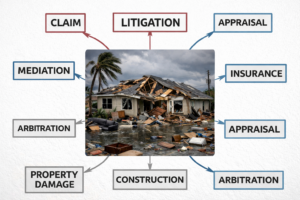
Now that the 2025 hurricane season is upon us, property insurance is on everyone’s mind. More than ever, it is important to understand what may or may not be covered or available in a real estate property insurance policy. In Florida real estate disputes involving property damage—especially those arising from hurricane claims, water intrusion, roof failure, or fire loss—appraisal is a common and often misunderstood mechanism for resolving disagreements over the value of the damage. While appraisal can offer a faster path to resolution than litigation, it also comes with potential risks that both property owners and insurers must carefully weigh.

What Is Appraisal?

Appraisal is an alternative dispute resolution (ADR) process commonly found in insurance policies. It is sometimes used after or in place of other alternative dispute resolution processes, such as mediation or arbitration. When triggered or requested, each party (typically the property owner and the insurance company) selects an appraiser, and those two appraisers usually, but not always, select a neutral umpire. The panel then determines the amount or value of the loss claimed. Appraisal is not used to determine coverage issues or disputes over policy language. Florida courts have consistently held that the purpose of appraisal is to resolve a factual dispute regarding the value of a covered loss—not to interpret the policy or determine liability. (See State Farm Fla. Ins. Co. v. Parrish, 312 So. 3d 145 (Fla. 2d DCA 2021)).

Legal Framework in Florida

Appraisal in Florida is governed largely by contractual language in the insurance policy and case law, rather than by a specific statute. Therefore, the option for appraisal will vary on a case by case basis as not every policy provides this option. However, courts uphold the enforceability of appraisal clauses as long as they are clear and not waived.

Key decisions related to appraisals include:

  • Johnson v. Nationwide Mutual Insurance Co., 828 So. 2d 1021 (Fla. 2002)(The Florida Supreme Court held that appraisal does not determine coverage, only the amount of loss).
  • Citizens Prop. Ins. Corp. v. Mango Hill Condo. Ass’n, 54 So. 3d 578 (Fla. 3d DCA 2011)(Clarified that when coverage is admitted but amount is disputed, appraisal is appropriate even if factual disputes exist).
  • State Farm Fla. Ins. Co. v. Crispin, 290 So. 3d 150 (Fla. 5th DCA 2020)(Reaffirmed that courts—not appraisers—should decide whether an appraisal clause has been triggered).
  • State Farm Fla. Ins. Co. v. Roof Pros Storm Division Inc. (2022) Case No. 5D20-2415, Case No. 5D20-2418, Case No. 5D20-2419, Case No. 5D20-2420; (Lack of subject matter jurisdiction prevented Court from appointing neutral umpire).
  • American Coastal Ins. Co. v. San Marco Villas Condo. Ass’n Inc., No. SC2021- 0883, 2024 WL 369079 (Fla. Feb. 1, 2024) (Florida Supreme Court allows Court to order the parties to appraisal even when the insurer has denied the claim).

When Is Appraisal Used?

Appraisal is frequently used in residential and commercial real estate claims when:

  • The insurer admits there is a covered loss, but the parties disagree on the amount of the loss.
  • The insured wants to avoid protracted litigation and wants to try to obtain a higher payment.
  • Both parties seek to preserve the relationship by avoiding adversarial proceedings.

Pros and Cons of Using Appraisal

Appraisal can be a time and money saving tool when there is a property damage dispute. Here are some positive aspects:

  • Speed: Appraisal is typically faster than litigation, with many decisions issued within months.
  • Cost-Effective: Legal fees may be lower than a full-blown lawsuit, though costs can still rise depending on experts and the appraisers and/or umpire selected.
  • Less Formal: Less procedurally complex than court, and less emotionally taxing for homeowners.

There are risks to appraisal also. Here are some important aspects to consider:

  • No Resolution on Coverage: Appraisers cannot determine whether the damage is covered by the insurance policy—only how much it costs to fix. This can result in a hollow “win” if the insurer still denies payment on coverage grounds.
  • Cost Uncertainty: If appraisers, umpires and then experts are needed, costs can escalate quickly.
  • Potential for Waiver: Delay in invoking appraisal or engaging in litigation may waive the right to use it.

Watch the Policy Language

Most Florida homeowner and commercial insurance policies contain appraisal clauses, but not all appraisal clauses are created equal. Carefully reviewing the timing, conditions, and selection process for the appraiser and/or umpire is essential. Also, note that demanding appraisal too late in the dispute could be interpreted as a waiver of the right to use it. Appraisal can be a powerful tool for Florida property owners and insurers—but only when used strategically. It is effective when coverage is not in dispute and both sides are committed to a fair valuation. However, when issues of causation, coverage exclusions, or policy interpretation exist, mediation or arbitration may be the better route if the parties are trying to avoid prolonged litigation.

Florida has long been recognized as a leader in alternative dispute resolution, and mediation stands at the center of that success story. In a legal environment often defined by crowded court dockets, rising litigation costs, and the emotional toll of conflict, mediation offers a path forward that emphasizes resolution, efficiency, and control.

Why Mediation Works in Florida

Florida courts encourage mediation at nearly every stage of litigation. Under Florida Statutes Chapter 44, mediation is defined as a “process whereby a neutral third person, called a mediator, acts to encourage and facilitate the resolution of a dispute between two or more parties.” Unlike trial or arbitration, mediation does not impose a binding decision; instead, it allows the parties themselves to craft solutions that meet their needs.

The success of mediation in Florida can be attributed to several key factors:

  • Judicial Support: Courts across the state routinely refer cases to mediation, from personal injury claims to family law disputes. In some counties, mediation is mandatory before trial.
  • Cost and Time Savings: Mediation avoids prolonged litigation and reduces attorney’s fees, court costs, and expert expenses.
  • Confidentiality: Florida’s Mediation Confidentiality and Privilege Act (§44.405, Fla. Stat.) protects what is said in mediation, encouraging open dialogue without fear of later use in court.
  • Control and Creativity: Mediation empowers parties to design outcomes that a court could not order—for example, structured payments, apologies, or creative business solutions.

Measurable Success in Practice

The statistics speak for themselves. According to the Florida Dispute Resolution Center, thousands of cases settle every year in mediation, with settlement rates often exceeding 70% in civil litigation. In family law, where emotions run high, mediation frequently results in agreements that not only settle the case but also preserve future relationships. A personal injury case, for example, may settle at mediation with both monetary compensation and agreement on structured medical care, providing peace of mind for all involved. In commercial litigation, mediation often bridges the gap between ongoing business relationships, preserving partnerships that would otherwise collapse in court. Recent statutory changes have also increased the importance of mediation. For example, Florida’s 2023 tort reform legislation (House Bill 837) altered attorney fee structures and insurance litigation strategies, pushing more disputes toward early resolution. With new limits on certain damages and the shortened statute of limitations, mediation has become an even more attractive option for litigants seeking certainty in an evolving legal landscape.

The Human Side of Mediation

Beyond numbers and statutes, mediation’s greatest success lies in its human impact. Unlike litigation, which is adversarial by design, mediation fosters communication and understanding. Clients leave with more than just a signed agreement—they leave with dignity, closure, and often, relief. For lawyers, mediation offers an opportunity to advocate for their clients in a less adversarial, more collaborative forum. For judges, it helps manage crowded dockets while delivering justice more efficiently. For parties, it provides a voice, a choice, and often, a faster resolution.

Florida as a National Leader in ADR

Florida was one of the first states to implement a statewide court-connected mediation program, and it remains a national model. With certified mediators trained under the Florida Supreme Court’s rigorous standards, parties can trust the neutrality, professionalism, and skill of those guiding their disputes. As litigation becomes increasingly complex and costly, mediation continues to stand out as one of the most effective tools in the Florida justice system. It succeeds not only in resolving cases but also in restoring peace, preserving relationships, and reducing the emotional and financial burdens of conflict. Mediation’s success in Florida litigation is undeniable. By combining judicial support, strong statutory protections, and a human-centered approach, mediation delivers results where litigation often falls short. Whether in personal injury, commercial disputes, or family law, mediation represents not just an alternative to litigation—it represents a better way forward.

May is Mental Health Awareness month, so let’s talk about stress and its effects! Litigators and trial lawyers are some of my favorite people because of the intense work ethic and bravery they have. Not only do they have to go to college, law school, and pass the bar exam- but then they must spend years honing the craft of persuasive argument while also practicing the delivery of that argument to seasoned litigators, judges, and lay people. It takes a special kind of person to be able to stand in front of a group of strangers in a court room, pour their heart out in argument for their position, and then wait in suspense as they decide whether to believe them or not. Waiting for a verdict can be some of the slowest moments a trial lawyer will ever experience in their life. But all that intensity sometimes comes at a price. The effects of that stress on the body eventually take a toll, especially as litigators grow in their careers.

Conflict and litigation – whether you’re the attorney or the client – can feel like an endurance test for both mind and body. The legal profession is notorious for its high-stress environment: lawyers juggle multiple cases, strict deadlines, and complex adversarial situations. The impacts of this stress do not stop with the attorneys, however, as the parties to the legal disputes also often experience chronic stress symptoms such as insomnia, impaired concentration, and even physical illness. This type of conflict can keep the body’s fight-or-flight response stuck in overdrive where stress hormones like cortisol and adrenaline flood our system, raising anxiety and causing negative effects on our health.

So, what can be done about it? Well, the good news is that science shows healthy lifestyle habits can act as powerful buffers against this stress. Regular exercise, meditation, sound nutrition, adequate sleep and meaningful connection with others can counteract the body’s stress response in unique ways. These aren’t just “feel-good” tips – they are evidence-based practices that calm the nervous system and build mental resilience. Below, we explore the science behind how each habit impacts your body’s response to stress and offer practical advice to fit them into a busy litigation lifestyle. Whether you’re a trial attorney facing the pressures of the courtroom or an individual battling through a high conflict lawsuit, these habits can help you stay calmer, clearer, and healthier when the stress is high.

Exercise: Physical Activity as Stress Relief

Breaking a sweat is one of the most effective natural stress remedies. When you exercise, your body chemistry changes in ways that blunt the stress response. Physical activity lowers levels of stress hormones like cortisol and adrenaline, while simultaneously boosting endorphins – the brain’s feel-good neurotransmitters. This surge of endorphins is what produces that post-workout “runner’s high,” a relaxed and optimistic feeling after moderate or intense exercise.[i] Exercise also helps the body practice dealing with stress by imitating the fight-or-flight response in a healthy context. These small micro-stress sessions help to train the body how to deal with stress in a safer environment. Over time, regular exercise can reduce the physical effects of stress – for example, it lowers resting heart rate and blood pressure, improves your body’s stress tolerance, and protects against stress-related illnesses. Beyond the biochemical effects, there’s a psychological boost too. Spending time dedicated to exercise also provides a mental timeout from legal worries. Focusing on weightlifting technique, a yoga pose, or simply the rhythm of your breath while running can pull your mind away from case anxieties and into the present moment. Regular workouts also improve self-confidence and sleep quality, both of which fortify you against daily stress. But how do you fit in the time to exercise when you are working all the time? Read below to find out!

Tips to Fit It In: Incorporating exercise into a busy, high-pressure work-life can be challenging, but it’s doable with some strategy:

  • Early Morning, Micro-Workouts or Transition: Everyone has a different schedule, so pick the time that works for you to be most successful at exercising. Whether you are an early riser or prefer to exercise after a stressful day, schedule the time so that it actually happens. Another option is to do 10–15 minute “micro” workouts during work day breaks – these short bursts of activity can lower tension and re-energize your mind.[ii] A walking treadmill at your desk is also an easy way to get in additional steps.

  • Mix Enjoyment with Movement: Pick activities you actually enjoy so that exercise isn’t another dreaded task. Whether it is doing a spinning class with a friend or taking a hike in nature, it is important to associate positive feelings with the exercise in order to create the habit.

  • Stack it with Routine: Tie exercise to an existing daily habit. For example, walk your dog in the morning and take an extra loop, or do a set of body-weight exercises right after you log off your computer each evening. Embedding movement into your schedule makes you less likely to skip it when things get busy.

Mindfulness & Meditation: Training the Relaxation Response

When stress from conflict is sky-high, mindfulness meditation is like a pressure valve for your nervous system. While meditation is certainly having a popularity moment, it has been used for centuries in many various forms to elicit the relaxation response. During meditation (or deep breathing, yoga, prayer – any mindful relaxation technique), the parasympathetic nervous system is activated, sending your body a message that it’s safe to calm down. Heart rate and blood pressure drop, muscle tension eases, and brainwave patterns shift. But being calm is not the best side effect- regular meditation practice can lower stress hormone levels, promote clearer concentration, improve cognition, encourage creative thought and empathy- and also help to reduce reactivity. A regular meditation practice can truly offer not only a “calm in the storm,” but can also help provide those “eureka” moments that lead to professional success.

Tips to Fit It In: You don’t have to escape to a monastery or chant for 5 hours a day to reap the benefits of mindfulness. Here’s how busy professionals can weave meditation into their day:

  • Check out an App or Watch a Few Videos: There is a veritable plethora of information on how to meditate online. From free Meditation Apps to “how to” videos on YouTube or TikTok, it is easy to learn how to meditate. If structure is better for you, consider a meditation app with scheduled sessions. If you prefer less commitment, try watching a few videos or perhaps even just doing it on your own.

  • Start with a Few Minutes: Begin with just 3–5 minutes of quiet breathing each day. For example, while you have your morning coffee or while you sit at your desk, close your eyes, and focus on slow, deep breaths for a few minutes. Even short sessions can start training your relaxation response. As it becomes comfortable, gradually increase the time. What really matters is consistency, not necessarily length of time. The more often you do it, the quicker you can reach that “calm in the storm”. In the beginning, just aim to do it daily or at least a few times a week. Over time, with consistent practice, you can do lengthier sessions if you wish.

  • Breathing Breaks in High-Stress Moments: When you feel stress surging (heart pounding before a big hearing or anger rising during a contentious meeting), take a strategic timeout. Excuse yourself for a bathroom break or simply pause at your desk to do a one-minute breathing exercise: inhale for a count of 4, exhale for count of 4 or 6, and repeat. This kind of slow, extended exhale breathing activates the vagus nerve and quickly calms the sympathetic “fight or flight” response. After some time of consistent practice, these moments of awareness will become second nature and you can train your body to automatically relax.

  • Mindfulness in Routine Activities: Not all mindfulness looks like sitting on a cushion. You can practice being fully present during everyday tasks such as when walking or doing a basic task like washing the dishes. The focus is to be present and stop the mental muti-tasking or run-away thoughts that have become so pervasive in our everyday lives. Sometimes, by just being “present,” the body will calm down.

Sleep: Recovery for Body and Mind

Sleep is often the first casualty of high-stress periods like trial prep or waiting for a verdict. Ironically, it’s also one of the most crucial factors in managing stress and maintaining mental health. Quality sleep restores a sense of balance in the brain and body that nothing else can. During deep sleep, stress hormone levels naturally fall and the brain’s emotional circuits reset, which is why after a good night’s sleep we typically feel more stable and less reactive. On the other hand, even one sleepless night can send stress levels skyrocketing. There is a documented link between sleep deprivation and increased cortisol levels in the body, meaning your body is literally acting as if under attack when you haven’t had enough rest. Over time, poor sleep not only harms health and concentration, it also erodes your emotional resilience, making you more susceptible to anxiety, depression, and burnout. For lawyers and litigants, prioritizing sleep is not a luxury – it’s a necessity. Sufficient sleep (experts recommend 7–9 hours for most adults) improves cognitive functions critical to legal work: memory, focus, complex reasoning, and emotional regulation. It’s much easier to manage a heated negotiation or unexpected setback when you’re well-rested; you’re less likely to snap at others or make reckless decisions. Conversely, chronic sleep loss lead to slower reflexes and impaired reasoning. By getting regular, high-quality sleep, you allow your body to physically dissipate stress hormones and your mind to consolidate memories and reset mood. If there is one keystone habit for wellness under stress, sleep is it.

Tips to Fit It In: When you’re busy and stressed, making time for sleep and improving its quality will pay dividends. But that can feel like an uphill battle. Here’s how to prioritize sleep even during a hectic litigation and work schedule:

  • Build Your Sleep Castle: Set the stage for recuperative sleep- review your bedroom environment and take an audit. Is it calming? Are there any disturbing lights? Is there ambient noise that can disturb your sleep? Are your bed and sheets comfortable? How is the temperature? Review your bedroom and make sure that it is truly the most calming place it can be. Sometimes that even means removing TVs or computers if they have lights or noises that cause you to wake up.

  • Protect Your Time Window: Treat sleep as a non-negotiable appointment with yourself. Aim for a consistent bedtime and wake time, even if work is demanding. For instance, if you know you have to be up by 6:30 AM to get to court, try to have lights out by 11:00 PM at the latest. This might mean setting an alarm at night reminding you to start winding down by 9 or 10 pm at the latest. Avoid the temptation to steal hours from sleep to get just one more task done – chronic shortcuts here will cost you more in efficiency and well-being long term.

  • Create a Wind-Down Routine: It’s hard to go from the adrenaline of late-night trial prep straight into peaceful slumber. Develop a pre-bedtime routine that signals your brain it’s time to disconnect. This might include 30 minutes of reading (non-work related) or listening to calming music, taking a warm shower, doing gentle yoga stretches, or practicing a relaxation technique like deep breathing or progressive muscle relaxation. Many find it helpful to limit electronic screens in that last half-hour because blue light from devices can trick your brain into wakefulness. If the news or social media tend to get you down, resist the temptation to take your phone with you to bed- it can be hard to fall asleep after reading or watching content that causes stress. Consider dimming lights and keeping the environment cool and dark – setting the stage for quality sleep.

  • Manage Work and Naps Wisely: Naps are not just for babies! Research indicates well times naps can help with stress levels and concentration. If you’re working very long hours, you might consider a power nap (15–20 minutes) in the afternoon to recharge – but be careful not to nap too late in the day or for too long, as that can interfere with nighttime sleep. Additionally, try to wrap up intense work a bit before bedtime. For example, resist the urge to read deposition transcripts until bedtime- instead try to stop at least 30 minutes before so the brain has time to calm down for sleep.

  • Address Sleep Problems Proactively: If stress is keeping you from sleeping or causes you to wake up after just a few hours of shut-eye, don’t accept sleeplessness as unavoidable. Use relaxation techniques at bedtime to help ease your body into sleep. Some people find white noise machines or phone apps with soothing sounds helpful to drown out a busy mind. To avoid the dreaded 2 AM wake up, try watching your intake of caffeine, stimulants, and alcohol, especially late in the day. Surprisingly, caffeine can linger for hours, and while alcohol might make you drowsy, it fragments your sleep quality and can lead to fitful bouts of midnight waking. But even if you do wake up, strategies like meditation and “box breathing” can help you fall back to sleep quickly. Research indicates that some of the most restorative sleep follows the Circadian rhythm. If insomnia, frequent waking, or anxiety about sleep becomes persistent, consider reaching out to a healthcare professional for additional strategies. Remember, getting the rest you need is one of the most effective ways to reduce stress and be at your best not just in the legal arena but also in the rest of your life.

“Zoom Fatigue”: The Hidden Energy Drain

It’s not all in your mind- fatigue when using virtual video platforms is real and we are slowly learning why and how it happens as remote work and virtual hearings have become common in legal practice. While virtual meetings have made access to legal proceedings easier than ever, a new kind of exhaustion has taken center stage. Many attorneys, judges, legal staff, and clients alike report feeling drained after a day of virtual meetings. Stanford researchers have studied the phenomenon and identified four major contributors to this exhaustion: excessive close-up eye contact, constant self-viewing, limited mobility, and increased cognitive load required to process nonverbal cues over video.[iii]

Unlike in-person interactions, where our peripheral vision helps us absorb cues and body language naturally, video calls and virtual meetings require intense sustained focus on a small screen to interpret tone, facial expressions, and engagement – all while simultaneously managing our own appearance and background. This creates a kind of hypervigilance, triggering stress. Moreover, on video we often feel compelled to appear “on” at all times, which increases emotional labor.[iv] For trial lawyers used to the quick dynamic nature of courtrooms or conferences, this way of working can feel particularly unnatural. And for litigants or clients, attending virtual hearings or depositions from home can blur boundaries, increase distractions, and increase stress.

Tips to Reduce Virtual Platform Fatigue:

  • Turn off self-view during calls when possible to reduce strain and subconscious anxiety.

  • Consider using a real background instead of blur. Early research on how backgrounds are perceived by virtual platform users indicates that viewers are consciously and subconsciously curious about what may be in the blurred background. This can cause other zoom participants to lose focus on what you are saying or showing as well.[v]

  • Schedule screen breaks between meetings if the meeting may go over an hour at a time.

  • Use phone calls instead of video when face-to-face isn’t essential.

  • Consider a sit/stand desk that allows you to get up from your chair even while you are on zoom.

  • If you have a wireless headset, you can take calls while walking around the room or at least stand.

  • Consider a desk walking pad, treadmill or under-the-desk cycle machine if you are tied to zoom for hours on end, such as for a deposition or meetings. It is easy to install these under a sit/stand desk and with proper camera positioning, you can move on the walking pad without it affecting how the camera captures you. Just a little bit of movement each hour can make a life altering difference to your energy level and physical

  • Have drinks and snacks handy if the meeting takes over an hour. Talk to the participants about mealtime expectations- don’t assume they will break for lunch or dinner!

  • Manage expectations and set clear start and end times for virtual meetings to protect boundaries.

Understanding and acknowledging video conferencing fatigue isn’t just about comfort – it’s about preserving mental bandwidth in a high-stress profession. The screen may be efficient, but it can come come at a neurological cost. Managing this kind of fatigue intentionally can help maintain clarity and composure, both during conflict and throughout your legal day.

Connection: The Superpower Hidden within All of Us

While stress can cause many physical symptoms, it has many intangible effects as well. By far one of the most far-reaching is its ability to foster and encourage loneliness. When people are under stress, they naturally self-isolate out of fear or anxiety or just being plain overwhelmed. In addition, when countless hours are needed to finish complex projects or to prepare for a trial, it is to be expected that litigators and litigants alike will experience loneliness.[vi] But the legal profession is not alone in dealing with this issue, social disconnection has become so pervasive that numerous countries have appointed special ministers to combat what they consider the significant public health crisis of loneliness.[vii] Between the isolation caused by electronic devices, the discord prevalent over social and political issues, and the overwhelming demands of work, it is no wonder that many lawyers continue to feel the intense feelings of loneliness on a daily basis. However, as with the other effects of stress, this too can be changed with a few simple strategies.

Tips to Foster Connection:

  • Volunteer for something that you are passionate about: Sometimes loneliness is caused by not having others interested in the same topics you are. If you are passionate about art or dogs or something else- consider volunteering just a few hours a month with an organization in that area. You will soon meet like minded people that will connect with you in an area you enjoy.

  • Sports and Exercise: If exercise is one of your favorite stress relievers, consider doing it with a buddy. Whether it is a jogging partner, someone that can spot you on deadlifts or a pickleball buddy, having a partner doing a physical activity with you can not only help you exercise consistently, they can also foster connection and positive feelings.

  • Hobbies are not just for retirees: With the intense time commitment needed to be successful as a litigator, it can seem impossible to have a hobby. But being lonely can in and of itself become a hobby. Consider taking up an art class or gardening club – or perhaps doing something you have never done before such as Improv Comedy. Sharing a similar interest can foster connection and promote positive feelings that will far outlast the time spent on the activity.

  • Not every lunch needs to be at your desk: Its really easy to just sit at your desk for every meal- but those are lost opportunities to not only get some exercise but to also foster connections with coworkers or to maintain friendships with people outside of work. Whether it is just meeting for a 15 minute brown bag lunch or a two hour wine and dine- sharing a meal with others is a great way to reset the mind and create a buffer from the stress of work.

  • Smile and Say Hello: It can be hard to put yourself out there to make new friends or connections. There are a multitude of reasons why that might feel incredibly uncomfortable or anxiety inducing. But as anyone that has watched a class of kindergartners on the playground has realized, at our core we all want to belong and we all just want to be friends. In her podcast, The Happiness Lab, Dr. Laurie Santos tackles the difficulties of making friends as an adult and offers a slew of strategies in her episode “The Secret to Making Friends as an Adult.”[viii] In another episode, she tackles specifically the challenges that introverts face when trying to make friends.[ix] So to quote Mr. Rogers, “Won’t you be my neighbor?”

Conclusion: Building Resilience in the Legal Arena

Chronic stress from legal conflict is a formidable opponent – it can wear down even the toughest individuals. But by proactively nurturing these four pillars of well-being (exercise, meditation, sleep and connection), you equip yourself with a personal toolkit for stress management. Think of it as strengthening your resilience muscle: each healthy habit reinforces your body’s natural defenses against stress. For lawyers, prioritizing wellness is not only about feeling better, but also performing better. A litigator who has healthy habits in place and has taken a moment to center themselves is going to be sharper and more composed than one running on junk food and a few hours of sleep. And for clients, maintaining these routines can make the legal process less overwhelming, giving a sense of control amidst uncertainty. Of course, in busy seasons you might falter – a trial week might mean missed workouts, an all-nighter, and increased stress levels. And you know what- that’s okay. Short periods of intense stress are normal and can even be helpful for buidling resilience. What we want to avoid is the chronic overwhelming stress that can cause significant health issues over time. The key is to build habits over the long run and return to them when you can. Even small steps, like a 5-minute meditationm parking far to get more steps, or choosing a salad over fast food, add up and signal to your body that it’s okay to relax.

In times of conflict, taking care of your physical and mental health is not indulgence, but essential self-care. By integrating exercise, mindfulness, connection and sleep into your life, you’ll be better equipped to handle the pressures of litigation with a clear mind and steady nerves. In the end, reducing stress isn’t about eliminating conflict, but about strengthening yourself to face it. With these practices in your routine, you can walk into each day feeling more grounded, resilient, and ready for whatever challenges the legal battlefield brings.

High-conflict situations—whether in relationships, the workplace, or society at large—can feel like emotional minefields. This experience is increasingly common: maybe you’re navigating a difficult divorce, co-parenting with an ex, managing workplace disputes, trying to stay connected to estranged family, or stuck in a romantic relationship that feels more explosive than supportive.

The good news? You’re not alone—and a growing body of research is shedding light on how high conflict develops and, more importantly, how we can move through it.

In High Conflict: Why We Get Trapped and How We Get Out, journalist Amanda Ripley explores how ordinary disagreements can escalate into all-consuming battles. She explains that high conflict often arises when identity, fear, and certainty override curiosity and connection. “High conflict is what happens when the normal rules of engagement break down—and emotion takes over,” she writes. Ripley encourages us to resist polarization and instead engage with humility and inquiry—tools that help de-escalate even the most entrenched disputes. As she puts it, “Curiosity is a powerful antidote to high conflict.” The book provides real world examples of high conflict and is an overview of this type of conflict as it operates in our broader society.

Organizations—including governments, universities, workplaces and more—are also recognizing that high conflict isn’t just disruptive; it’s costly. Over time, conflict within teams that does not get resolved can lead to loss of valuable talent, reduce employee morale and cost companies significantly in terms of lost productivity and profits. But organizations can do something about this. Carnegie Mellon University, for example, offers an online resource through its Student Affairs division that defines high conflict and provides tools for managing it: CMU Student Affairs – Civility – High Conflict. By educating students early, they aim to prevent conflicts from escalating beyond repair. Other organizations, including private companies, are increasingly reaching out to professionals that can train their employees on how to recognize and resolve these types of conflict and promote the valuable team work that is the hallmark of every successful organization.

For those in intimate partnerships, Help for High-Conflict Couples by Jacqueline Wielick and Jenny Estes Powell offers a compassionate and practical guide. The authors provide strategies to interrupt cycles of blame and defensiveness, instead emphasizing empathy, validation, and boundary-setting: “Even in the most reactive relationships, small changes in how we respond can create space for healing.” Their book includes exercises and techniques to help couples break free from painful dynamics. Additional tools are available at their website and and on their YouTube channel.

No discussion of high conflict would be complete without Bill Eddy, a therapist, lawyer, and co-founder of the High Conflict Institute alongside Megan Hunter. Eddy has written extensively on managing high-conflict personalities, and has a plethora of excellent books on dealing with this subject. A great book to start with is BIFF: Quick Responses to High-Conflict People. It offers a simple but powerful framework for communication. “BIFF” stands for Brief, Informative, Friendly, and Firm—a method that helps keep your message clear and reduces emotional escalation. Whether you’re responding to a hostile text or navigating co-parenting emails, BIFF can help you stay grounded and avoid feeding the drama.

Eddy’s book High Conflict People in Legal Disputes further examines the behavioral patterns behind prolonged legal battles—traits like all-or-nothing thinking, unmanaged emotions, and constant blame. Recognizing these patterns early is key. As Eddy writes, “High conflict people aren’t just difficult—they follow predictable patterns. Recognizing them is the first step to managing them.”

While we can’t always avoid high-conflict situations, we can control how we engage with them. Across all these resources, one message stands out: high conflict isn’t just about “difficult people”—it’s about predictable dynamics that can be understood, managed, and even changed. The key lies in our own responses. Whether you’re a professional peacemaker or someone caught in the crossfire, these insights offer clarity, hope, and a path forward.

When families face legal disputes, emotions run high, and tensions can escalate quickly. Whether dealing with divorce, child custody, or support issues, finding a resolution that benefits all parties involved is crucial. Mediation is an effective and often underutilized tool in Florida family law cases, offering a path to resolution that is less adversarial, more cost-effective, and ultimately beneficial for all involved.

What is Mediation?

Mediation is a voluntary, confidential process where a neutral third-party mediator helps disputing parties communicate and negotiate an agreement. Unlike litigation, which involves court proceedings and a judge’s ruling, mediation allows the parties to maintain control over the outcome and work collaboratively toward a mutually acceptable solution.

Why Mediation is Valuable in Family Law Cases

  1. Reduces Conflict and Promotes Cooperation

Traditional courtroom battles can be contentious, leading to prolonged stress and damaged relationships. Mediation fosters open dialogue, helping parties focus on problem-solving rather than blame. This cooperative approach is especially beneficial in cases involving children, where maintaining a working relationship between parents is essential for co-parenting.

  1. Cost-Effective Alternative to Litigation

Legal battles can be expensive, with attorney fees, court costs, and lengthy proceedings draining financial resources. Mediation is often significantly more affordable, as it typically requires fewer billable hours and avoids drawn-out court proceedings.

  1. Confidential and Private

Courtroom proceedings are public records, meaning sensitive family matters may become part of the public domain. Mediation, on the other hand, is a private process, allowing families to resolve disputes without public scrutiny.

  1. Empowers Parties to Make Their Own Decisions

Rather than having a judge impose a ruling, mediation allows the involved parties to craft an agreement tailored to their unique needs and circumstances. This sense of control often leads to greater satisfaction with the outcome and higher compliance rates with the agreed terms.

  1. Faster Resolutions

Court cases can drag on for months or even years, prolonging uncertainty and emotional distress. Mediation is typically much quicker, enabling families to move forward with their lives sooner rather than later.

  1. Preserves Family Relationships

Litigation can strain family ties, making it harder for parties to communicate after the case is resolved. Mediation encourages respectful dialogue, helping to preserve important family relationships, particularly between co-parents who will need to interact regarding their children.

Is Mediation Right for You?

Florida courts strongly encourage mediation in family law cases, and in many instances, it is a required step before proceeding to trial. The Florida Supreme Court has established rules governing mediation, ensuring a fair and structured process for all participants. Certified family law mediators in Florida are trained professionals who facilitate discussions, guide negotiations, and help families reach agreements that align with the state’s legal requirements.

Mediation is an excellent option for many family law disputes, but it is most effective when the parties are willing to cooperate. For most families, mediation provides a constructive and efficient way to resolve conflicts without the emotional and financial toll of litigation. If you’re facing a family law dispute in Florida, considering mediation could be the key to finding a peaceful, fair resolution. Consulting with a qualified mediator can help you determine whether this approach is the best fit for your unique situation. Mediation is a powerful tool in Florida family law cases, offering a less adversarial, more cost-effective, and emotionally supportive path to resolution. By promoting cooperation, protecting privacy, and empowering families to make their own decisions, mediation helps create lasting solutions that work for everyone involved. If you’re navigating a family legal dispute, exploring mediation could be the first step toward a more amicable future.


When disputes arise, finding a timely and cost-effective resolution is often a top priority for all parties involved. One alternative to traditional litigation is arbitration, and in Florida, non-binding arbitration offers a unique option. While binding arbitration has the power to make decisions that the parties must adhere to, non-binding arbitration in Florida allows for a more flexible approach to dispute resolution. Although it is not used consistently across all jurisdictions in the State, many Courts in Florida are increasingly requiring parties to attend both mediation and non-binding arbitration prior to trial. For the Courts, this provides a way to reduce ever increasing caseloads and clogged trial dockets. For the parties, it provides a quicker and often inexpensive way to resolve the case, short of a trial.

What is Non-Binding Arbitration?

Non-binding arbitration is a form of alternative dispute resolution (ADR) where an impartial third-party arbitrator hears the case and makes a recommendation. Sometimes there is one arbitrator and other times there is a panel of arbitrators, usually up to three. However, unlike binding arbitration, the decision (or award) rendered by the arbitrator is not final or binding unless the parties elect to make it so. This means that the parties involved in the dispute have the option to accept the arbitrator’s recommendation, negotiate further, or take the matter to court if they are unsatisfied with the outcome. In Florida, non-binding arbitration is often used in civil disputes, including personal injury cases, property damage cases, contract disagreements, and family law matters.

There are specific rules, however, as it relates to non-binding arbitration in Florida that litigators should be aware of. A recent excellent overview of these rules, procedures and other concepts to consider when handling a non-binding arbitration in Florida is provided by Tiffany Hamilton, Esq. in “Non-Binding Arbitration: Tools for Your ADR Toolbox”, Volume 11 of the Stetson Journal of Advocacy and the Law, 11 Stetson J. Advoc. & L. 207 (2024)[i]. In this article, Ms. Hamilton reviews the authority providing for the use of nonbinding arbitration in Florida and offers strategic points to consider when choosing an arbitrator, drafting the argument and more. In addition, practical materials such as Continuing Legal Education seminars from the Florida Bar can provide an overview of the nonbinding arbitration process for those that have not dealt with it before.[ii]

Recent changes to the Florida Rules of Civil Procedure have also impacted nonbinding arbitration. For example, a recent amendment to the Florida Rules in Fla. R. Civ. P. 1.820(h) provides that the party must reject the arbitrator’s decision within 20 days and “…no action or inaction by any party, other than the filing of the notice, will be deemed a rejection of the arbitration decision.”[iii]  This recent rule change is probably the result of recent cases providing conflicting guidance on what notice is sufficient when rejecting the award. A recent case highlights the dangers of not complying with the rule: In People’s Trust Insurance Company v. Hernandez, 4D2024-3274 (Fla. 4th DCA March 26, 2025), the Fourth District held that a party seeking to reject a non-binding arbitration award and proceed to trial must strictly comply with Rule 1.820(h)’s requirement of filing “a notice of rejection of the arbitration award and request for trial in the same document.”[iv] In addition, while Florida Statutes and the Florida Rules of Civil Procedure should be reviewed when handling a non-binding arbitration, many Florida Circuits now have specific local requirements and Orders that are unique to their area. Attorneys handling non-binding arbitrations should consult local rules when preparing for and handling a nonbinding arbitration.

Brief Overview of the Process of Non-Binding Arbitration in Florida

The process of non-binding arbitration in Florida typically follows several key steps:

  1. Agreement to Arbitrate: Parties can agree to submit their dispute to non-binding arbitration or the court may mandate non-binding arbitration as a pre-trial procedure for certain types of cases, especially in civil litigation.
  2. Selection of Arbitrator: The parties select an arbitrator, usually someone with experience in the area of dispute. In Florida, arbitrators may be retired judges, lawyers, or professionals with expertise in the subject matter of the dispute. If the parties cannot agree on an arbitrator, the court can assist in appointing one.
  3. Pre-Arbitration Procedures: Before the arbitration hearing, the parties typically exchange relevant documents and evidence. The arbitrator may also set deadlines for submissions or request additional information to help assess the dispute.
  4. Arbitration Hearing: The hearing is relatively informal compared to a court trial. The parties present their cases, submit evidence, and may question witnesses. The arbitrator then considers the information presented and issues an award.
  5. The Award: After reviewing all the evidence and hearing from both sides, the arbitrator issues an award, which is a recommendation on how the dispute should be resolved. This decision is non-binding, meaning that neither party is required to accept the arbitrator’s conclusion. If the parties agree with the award, they may enter into a settlement. If one or both parties disagree, they can (and must) proceed to court and file the appropriate notices and motions to continue the case towards a final hearing or trial.

Advantages of Non-Binding Arbitration in Florida

Non-binding arbitration in Florida offers several benefits:

  1. Cost-Effectiveness: Legal battles can be expensive, especially in complex cases. Non-binding arbitration typically costs less than litigation due to the shorter time frame and more streamlined process.
  2. Faster Resolution: Traditional court cases can take months or even years to resolve. Non-binding arbitration, on the other hand, is often faster, helping to alleviate the burden of long delays.
  3. Flexibility: The parties have the option to reject the arbitrator’s award and proceed to court if they feel the decision is unsatisfactory. This flexibility makes non-binding arbitration an appealing option for those who want a resolution without fully committing to a legally enforceable decision.
  4. Confidentiality: Non-binding arbitration hearings are generally private, which can provide confidentiality for the parties involved. This is particularly important in business or personal matters where sensitive information may be discussed.
  5. Preserving Relationships: Because the process is less adversarial than going to trial, non-binding arbitration can help preserve relationships between the parties. This is especially valuable in family disputes or commercial matters where future collaboration may be necessary.

Conclusion

Non-binding arbitration provides a valuable alternative to litigation for resolving disputes in Florida and has been quickly evolving for the past few years into a robust option to trial. It offers a faster, less costly, and more flexible path to resolution, while still preserving the option to pursue traditional legal action if neded. For parties seeking a way to settle disagreements without the complexity and expense of a courtroom trial, non-binding arbitration can be a viable solution.

[i] https://www2.stetson.edu/advocacy-journal/non-binding-arbitration-tools-for-your-adr-toolbox/

[ii] The Florida Bar CLE: 8576 Nonbinding Arbitration in Florida: A Colloquy between Bench and Bar – https://member.floridabar.org/CPBase__item?id=a10WQ000000ZtrFYAS; 8190 Nonbinding Arbitration Hearings: Learn How or Get Left Behind! – https://member.floridabar.org/CPBase__item?id=a10Dm000000kWSIIA2

[iii] Fla. R. Civ. P. 1.820(h)

[iv] People’s Trust Insurance Company v. Hernandez, 4D2024-3274 (Fla. 4th DCA March 26, 2025)(providing that Rule 1.820(h) will be strictly enforced, and parties must comply with its requirements if they decide to reject a nonbinding arbitration award).

Mediation is a powerful tool for resolving conflicts, but its success depends on how it’s approached. Here are a few strategies to help ensure a smooth and productive mediation process:

  1. Prepare Ahead of Time: Before entering mediation, take time to reflect on your goals and understand the issues at hand. Gather any relevant information and consider your options. This preparation helps you communicate more effectively and stay focused during discussions. 
  2. Keep an Open Mind: Successful mediation requires a willingness to listen and understand the other party’s perspective. Try to stay open to different solutions and consider the other side’s position or motivation. Sometimes imagining yourself on the other side can provide valuable insight as to what may actually be their bottom line in the negotiation. Flexibility can lead to creative, mutually beneficial outcomes.
  3. Use Neutral Language: Mediations are more successful when accusatory or inflammatory language is avoided. While it can be hard, especially when emotional issues are involved, staying neutral will usually get you much further in your negotiations. Try to frame your statements in a way that fosters understanding and cooperation. 
  4. Stay Calm and Patient: Mediations can sometimes become tense or they can take a long time. Try to maintain a calm demeanor and practice patience. Some mediations are more like a marathon, instead of a sprint. Make sure you are in a comfortable location and you have access to snacks and water if the mediation is expected to last longer than a few hours. Staying composed helps keep the discussion productive and prevents emotions from derailing the process.
  5. Focus on Interests, Not Positions: Rather than focusing on specific positions, which can feel like a win-lose scenario, try to identify the underlying interests of both parties. This helps in finding solutions that satisfy everyone’s needs.

While mediation requires the involvement of all parties to be successful, with these strategies you increase the likelihood of reaching a resolution that is fair, lasting, and beneficial for all involved.