
Tag Archive for: damages

On May 23, 2024, the Florida Supreme Court rewrote the rules of engagement for civil discovery in state court. In re: Amendments to Florida Rules of Civil Procedure, 386 So. 3d 497 (Fla. 2024). The Court adopted sweeping amendments to Florida Rule of Civil Procedure 1.280, effective January 1, 2025, with further refinements issued on December 5, 2024, and again on June 15, 2025. The result is a procedural overhaul that touches every civil case filed in Florida’s state courts. The amendments did three things. First, they introduced mandatory initial disclosures modeled after Federal Rule of Civil Procedure 26(a). Second, they replaced the old “reasonably calculated to lead to the discovery of admissible evidence” standard with the federal proportionality framework from Rule 26(b)(1). Third, they imposed a continuing duty to supplement discovery and backed it all up with expanded sanctions under amended Rule 1.380.

Fourteen months in, the question every litigator wants answered is this: Has Rule 1.280 reduced litigation, or has it simply created new things to fight about?

The Old Regime: A System Built on Delay

Before January 1, 2025, Florida’s discovery framework was remarkably permissive. Rule 1.280, in its prior form, contained no mandate for initial disclosures. Parties obtained discovery exclusively through traditional devices: depositions, interrogatories, requests for production, and requests for admission. There was no obligation to disclose anything without a formal request. See Fla. R. Civ. P. 1.280(a) and (f) (2021).

No time requirements governed the initial exchange of discovery unless the court entered an order. The result was predictable- cases stalled and discovery “fishing expeditions” flourished under a standard that allowed anything “reasonably calculated to lead to the discovery of admissible evidence.” That standard, while familiar, invited overreach. Florida courts had long recognized this problem. In Surf Drugs, Inc. v. Vermette, 236 So. 2d 108 (Fla. 1970), the Florida Supreme Court rejected tactics of “surprise, trickery, bluff, and legal gymnastics,” holding that discovery should serve the search for truth. In Dodson v. Persell, 390 So. 2d 704 (Fla. 1980), the Court addressed disclosure of surveillance materials and rejected trial by ambush. These cases planted the seeds of proportionality long before the word appeared in the rule.

The New Framework: What Changed

In 2021, Florida adopted the Celotex/Anderson/Matsushita summary judgment standard when it rewrote Rule 1.510. Before that, the Legislature codified the Daubert standard for expert testimony. Now, with Rule 1.280, Florida has adopted the federal discovery framework wholesale.

Mandatory Initial Disclosures

Amended Rule 1.280(a) now requires each party to provide initial disclosures within 60 days after service of the complaint or joinder, without awaiting a formal discovery request. See Fla. R. Civ. P. 1.280(a)(3). The disclosures must include: (A) the name and contact information of individuals likely to have discoverable information, along with the subjects of that information; (B) copies or descriptions of documents in the party’s possession that may support its claims or defenses; (C) a computation of each category of damages claimed, with supporting documentation; and (D) copies of any insurance policies that may be available to satisfy a judgment. See Fla. R. Civ. P. 1.280(a)(1)(A)–(D). This mirrors Federal Rule 26(a)(1) almost exactly. For the first time, Florida state court litigants must lay their cards on the table before anyone asks to see them.

The Proportionality Standard

Amended Rule 1.280(c)(1) now provides that parties may obtain discovery regarding any nonprivileged matter that is “relevant to any party’s claim or defense and proportional to the needs of the case.” The rule requires courts to consider six factors: (1) the importance of the issues at stake, (2) the amount in controversy, (3) the parties’ relative access to relevant information, (4) the parties’ resources, (5) the importance of the discovery in resolving the issues, and (6) whether the burden or expense outweighs the likely benefit. Fla. R. Civ. P. 1.280(c)(1).

The Court’s commentary made its intent explicit: “The scope of discovery in subdivision (c)(1) is amended to adopt almost all the text of Federal Rule of Civil Procedure 26(b)(1) and is to be construed and applied in accordance with the federal proportionality standard.” In re:  Amendments to Florida Rules of Civil Procedure, No. SC2023-0962, at *3 (Fla. Dec. 5, 2024). The Court stated that this commentary “should be sufficient to lead practitioners and judges to look to federal history and precedents when applying proportionality.” Id.

The Duty to Supplement and Expanded Sanctions

Amended Rule 1.280(g) imposes a continuing obligation to supplement initial disclosures and prior discovery responses when a party learns that its earlier disclosure was materially incomplete or incorrect. This duty runs throughout the life of the case.

The enforcement mechanism has teeth. Amended Rule 1.380 provides that a party who fails to make required disclosures under Rule 1.280(a) may face a motion to compel and sanctions. Under Rule 1.380(d), a party that fails to disclose information or identify a witness “is not allowed to use that information or witness to supply evidence on a motion, at a hearing, or at a trial, unless the failure was substantially justified or is harmless.” Additional sanctions include informing the jury of the failure and monetary penalties. On June 15, 2025, the Court adopted a further amendment to Rule 1.280(f), clarifying that a party “may not seek discovery from any source before that party’s initial disclosures are served on the other party, except when authorized by stipulation or by court order.” This addressed a growing problem: some litigants were refusing to respond to discovery requests by claiming their initial disclosure obligations had not been “satisfied” despite having served disclosures.

Has the Rule Reduced Litigation or Increased It?

This is the central question, and the honest answer is: it depends on what you mean by “litigation.”

The Case for Reduction

The amendments are designed to compress timelines and eliminate gamesmanship. Mandatory initial disclosures force early transparency. Proportionality gives courts a principled basis to deny sweeping, boilerplate discovery requests. The continuing duty to supplement reduces the frequency of “gotcha” moments at trial. Taken together, these features should reduce the volume of discovery disputes and accelerate case resolution.

Federal experience supports this theory. After the 2015 federal amendments, courts reported that proportionality was “achieving the goal of focusing the courts on the actual needs of the case,” and that parties were “reining in discovery—even arguably ‘relevant’ discovery—that is not necessary for ultimate resolution.” See Hon. Suzanne H. Segal, “Proportionality and Necessity Under Federal Rule of Civil Procedure 26(b),” Advocate Magazine (July 2017). The Standing Committee on Rules of Practice and Procedure itself predicted that “proportional discovery will decrease the cost of resolving disputes without sacrificing fairness.” The new case management framework under rewritten Rule 1.200 reinforces this. Cases are now assigned to streamlined (12-month), general (18-month), or complex (30-month) tracks, with strict deadlines enforced by case management orders. The structural pressure to move cases toward resolution is real.

The Case for Increased Litigation

But there is a counterpoint, and it deserves serious attention. New rules generate new disputes. Proportionality itself is now a battleground. In federal court, the 2015 amendments did not eliminate discovery disputes. They changed the vocabulary. Florida is following the same pattern. Defense counsel invoke proportionality to resist discovery, plaintiffs’ counsel argue that burden alone does not carry the day, and judges must resolve those disputes on a case-by-case basis. Justice Labarga’s partial dissent in the May 2024 opinion flagged a practical concern that has proven prescient: it will be difficult for practitioners to get hearing time to litigate proportionality objections without impairing case management deadlines, “given the strict deadlines mandated” by the new rules. See In re Amendments to Florida Rules of Civil Procedure, 386 So. 3d at 501 (Fla. 2024) (Labarga, J., concurring in part and dissenting in part). Florida’s state courts are overburdened. Adding a new layer of proportionality analysis to every contested discovery issue puts additional strain on already limited judicial resources.

The initial disclosure requirement has also generated its own friction. The June 2025 amendment to Rule 1.280(f) was itself a response to gamesmanship, where parties refused to respond to discovery by exploiting ambiguity about whether disclosure obligations had been “satisfied.” That the Court had to step in and amend the rule again within six months of its effective date tells you something about how quickly disputes proliferated. Additionally, the sanctions framework under Rule 1.380 creates new motion practice. Every failure to disclose, every delayed supplement, every unsigned discovery response becomes a potential sanctions motion. The rule requires that motions to compel include a certification of good-faith conferral, which itself adds procedural steps. See Fla. R. Civ. P. 1.380(e)(2).

The Practitioner’s Perspective

The practicing bar is adjusting, but not without growing pains. Presuit investigation is now more important than ever because initial disclosures must be prepared within 60 days. Decisions about presuit experts, surveillance materials, and event data recorder downloads must be made early to avoid disclosure pitfalls. Undisclosed presuit investigations may be barred from use at trial.

The e-discovery implications are significant. The Florida Electronic Discovery and Digital Evidence Committee (EDDEC) issued guidelines in June 2025 that practitioners are expected to follow. These guidelines address custodian identification, search methodology, form of production, and metadata handling. They function as a practical how-to manual for the post-2025 era. Amended Rule 1.280 is the most consequential change to Florida civil procedure in a generation. Its goals are sound: transparency, proportionality, efficiency. And in the long run, it will likely reduce the overall volume of discovery-related motion practice. Mandatory disclosures should reduce the need for early interrogatories and document requests. Proportionality should curb the most egregious discovery overreach. Strict case management deadlines should keep cases moving.

But the short-term reality is messier. Florida’s state courts are not federal courts. They lack the magistrate judge system that makes proportionality disputes manageable in federal practice. They also do not have the same level of support in the form of clerks and research attorneys that the federal courts have. Additionally, state court dockets are heavier and resources are thinner throughout the state judicial system. The rule has not yet reduced litigation. It has shifted litigation from one arena to another, from disputes about relevance to disputes about proportionality, from fights about what must be disclosed to fights about the sufficiency of disclosures. That shift may ultimately prove beneficial. But for now, Florida’s courts and the attorneys practicing in them are in a transition period, and transitions are never tidy.

Key Sources
  • In re Amendments to Florida Rules of Civil Procedure, 386 So. 3d 497 (Fla. 2024).
  • In re Amendments to Florida Rules of Civil Procedure, No. SC2023-0962 (Fla. Dec. 5, 2024).
  • Fla. R. Civ. P. 1.280 (as amended Jan. 1, 2025; further amended June 15, 2025).
  • Fla. R. Civ. P. 1.380 (as amended Jan. 1, 2025).
  • Fed. R. Civ. P. 26(a)(1), (b)(1).
  • Surf Drugs, Inc. v. Vermette, 236 So. 2d 108 (Fla. 1970).
  • Dodson v. Persell, 390 So. 2d 704 (Fla. 1980).
  • Grau v. Branham, 626 So. 2d 1059 (Fla. 4th DCA 1993).
  • Alvarez v. Cooper Tire & Rubber Co., 75 So. 3d 789 (Fla. 4th DCA 2011).
  • Helena Agri-Enterprises, LLC v. Great Lakes Grain, LLC, 988 F.3d 260 (6th Cir. 2021).
  • Topp Telecom, Inc. v. Atkins, 763 So. 2d 1197 (Fla. 4th DCA 2000).
  • Hon. Suzanne H. Segal, “Proportionality and Necessity Under Federal Rule of Civil Procedure 26(b),” Advocate Magazine (July 2017).

Disclaimer: This blog post is for informational purposes only and does not constitute legal advice. Consult a qualified attorney for guidance specific to your situation.

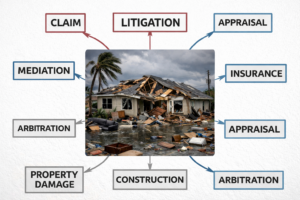
Florida’s first-party property litigation landscape has changed dramatically over the past few years. Pre-suit requirements are stricter, fee shifting has almost disappeared and summary judgment is elusive at best. These changes have altered one central question: When is the right time to mediate? Unfortunately, there is no universal answer. Timing now depends on leverage, risk tolerance, and how fully the factual record has developed.

Mediation Before Appraisal

In disputes where coverage is admitted but scope and pricing are contested, early mediation can still work. Particularly where both sides recognize that appraisal is inevitable, mediation can frame parameters and narrow issues before additional costs are incurred.

However, when causation is disputed, appraisal may not resolve the true conflict. As clarified in Johnson v. Nationwide Mutual Insurance Co., 828 So. 2d 1021 (Fla. 2002), coverage issues remain judicial questions. Mediation before those issues crystallize may result in positional bargaining rather than a meaningful risk analysis that could lead to settlement.

Strategic takeaway: Early mediation works best when the dispute is economic, not legal.

The DFS Mediation Program: An inexpensive and commonly misunderstood option

Florida’s Department of Financial Services administers a voluntary mediation program under §627.7015 for personal lines and commercial residential property insurance claims. It is available before appraisal or litigation, the insurer bears the cost, and insurers are required to notify policyholders of the program when a claim is filed. DFS mediation under §627.7015 is a voluntary option. What is mandatory is the pre-suit notice of intent to initiate litigation under §627.70152, which requires the claimant to file a notice with the DFS at least 10 business days before filing suit. A recent case notes that this notice of intent can also be retroactive. See generally Universal Property and Casualty v. Griffin, 51 Fla. L. Weekly D352B  (4th DCA 2026).  The insurer must respond in writing within that window, either with a settlement offer or a demand for appraisal. That is a notice-and-response requirement, not a mediation requirement.

The distinction matters strategically. In a DFS Mediation, if a settlement is reached, the policyholder has three business days to rescind assuming certain parameters are met. But the process is informal, conducted through DFS-appointed mediators, and designed to resolve disputes without adversarial proceedings. For straightforward scope-and-pricing disputes, particularly in personal residential claims, it can produce early resolution at minimal cost.

However, DFS mediation usually occurs before the factual record has been fully developed. There are usually no depositions, expert reports, and no litigation pressure driving the insurer’s evaluation. For complex claims or disputes involving causation, the program often lacks the information density needed for meaningful negotiation or resolution.

Strategic takeaway: DFS mediation is a useful early option for straightforward disputes, but counsel should not confuse it with a pre-suit requirement or treat it as a substitute for litigation-stage mediation in complex cases.

Mediation After Key Depositions

Adjuster, expert, corporate representative and claimant depositions frequently shift settlement value. When testimony clarifies claim handling decisions or exposes weaknesses in expert opinions, parties can reassess risk. Under Florida’s alignment with the federal summary judgment standard FRCP 1.510, trial risk has increased. A well-timed mediation after fact depositions but before expensive expert discovery often produces the most rational evaluation.

Strategic takeaway: Mediate when uncertainty narrows but before costs escalate.

Mediation During the Civil Remedy Notice Period

Section 624.155(3)(d) creates a 60-day cure window. As explained in Talat Enterprises, Inc. v. Aetna Casualty & Surety Co., 753 So. 2d 1278 (Fla. 2000), the insurer’s payment of contractual damages within that window can preclude a statutory bad faith action. Mediation during this window can be powerful. It allows both sides to explore resolution without committing to entrenched litigation strategy.

Strategic takeaway: CRN-period mediations require a fully developed factual presentation.

Post-Summary Judgment Hearing

The 2021 summary judgment standard has increased judicial willingness to resolve coverage disputes pre-trial. A pending dispositive motion often creates the sharpest settlement clarity. If the ruling defines the case’s trajectory, mediation immediately before the hearing can avoid unnecessary appellate risk. If the ruling will likely deny relief, mediation immediately can recalibrate expectations.

Strategic takeaway: Summary judgment deadlines create natural settlement inflection points.

The Economic Reality After Fee Reform

With the repeal of §627.428 through House Bill 837 (2023), both plaintiffs and carriers evaluate cases differently. Without one-way fees, plaintiffs must weigh litigation costs against potential net recovery. Carriers evaluate defense spending against exposure without automatic fee multipliers. This economic shift makes mediation more effective when both sides have concrete budgets and litigation forecasts, not speculative projections.

Strategic takeaway: Both sides need to understand their true economic impacts to make the most of mediation.

The Mediator’s Role in Timing

Timing is not merely procedural; it also has an economic and psychological impact. Early mediations often test credibility and assessment systems. Mid-case mediations test endurance. Late mediations test risk tolerance and trial strategies.

The most productive sessions occur when the parties understand their evidentiary strengths and weaknesses, the legal issues are framed but not conclusively decided, and litigation costs have become real but not yet irretrievable. In today’s Florida property litigation environment, mediation is most effective when it follows strategic development rather than procedural scheduling.

Conclusion

There is no universally “correct” moment to mediate a first-party property case. But there are clearly identifiable leverage points.

  • Early for economic disputes.
  • Mid-case for factual clarity.
  • Pre- or post-summary judgment for legal distinction.

Understanding those phases allows counsel to use mediation not as a docket event, but as a deliberate strategy.​​​​​​​​​​​​​​​​

Atul Gawande’s The Checklist Manifesto was a revolutionary evaluation of how basic checklists and procedures can guarantee error free success time and time again.[1] Many of us may chafe at having to following a basic list of things to do, but his book makes a simple point: no matter how expert we are, a well-designed checklist helps us do the right things, in the right order, every time. In an era when our attention is scattered and the demands on our time are increasing by the minute, it is no wonder that critical errors in many fields are not only on the rise, they are increasingly becoming the norm. The legal profession is no exception and missing critical steps in a case are increasingly common. Unfortunately, these errors lead not only to increased stress for practitioners, but also to an increase in costs in the long run for not only clients, but also the professionals serving them. For this reason, following a checklist prior to mediation- whether it is basic or detailed- may not only save you from costly errors, it may also lead to a better settlement faster. The result isn’t duplicative or wasted effort- it’s fewer mistakes, clearer thinking, and better outcomes.[2]

Why Checklists and Procedures Lead to Repeated Success

Everyone wants to be successful, but why are some people and companies more successful than others? Why can some companies repeat their success over and over, while others are a “one hit wonder” that struggle or can never repeat their initial win? The secret lies not in the “flash in the pan” ideas, but in the daily grind of showing up and doing the right and the hard – and usually boring- thing over and over. There’s hard evidence behind that claim. The WHO’s 19-item surgical safety checklist, studied across eight hospitals worldwide, cut major complications and deaths significantly-proof that a short, disciplined list can change outcomes in complex, time-pressured environments.[3] Is that list boring? Sure it is. Is there temptation to skip some items? Sure there is. But studies show that repeatedly following that simple and boring list guaranteed successful outcomes. This is a concept that is repeated over and over- whether it is McDonald’s incredible success with their “Speedee Service System” or an Olympic athlete who achieves success due to their commitment to relentless practice and exercise no matter what else might be going on.[4]

Over time, many industries, from manufacturing to the military, have realized the necessity of having procedures in place to guarantee repeated success for deliverables. In Getting Things Done, David Allen also extols the many benefits of keeping to-do items on a list to be productive, instead of stressed and distracted. It frees the mind to concentrate on other issues while keeping a place for those “must get done” items.[5] Another seminal work on the value of following procedures and lists to free the mind for deep and concentrated work is Deep Work by Cal Newport. Published in 2016, this was one of the first in-depth discussions on how distraction is leading to increased error rates and the cost of those errors not only on our professional lives, but also in our personal lives.[6] Stolen Focus by Johann Hari, published in 2024, is one of the latest books on this increasingly important topic of how our attention is not only divided, but is also increasingly for sale to the highest bidder in the digital arena.[7] It appears that distraction is here to stay, and it is time to strategize both offensive and defensive plans of attack to continue to provide the best legal service possible.

Legal organizations have reached the same conclusion: “old-school” checklists streamline practice, improve teaming, and make knowledge shareable across a firm.[8] And in negotiation scholarship, robust preparation frameworks from Harvard’s Program on Negotiation show how structured pre-work creates value at the table.[9] Put simply: checklists make good lawyers not only great, but consistently successful. While mediation and arbitration are certainly different from surgery or flying an airplane, they are just as information-dense and decision-heavy. A checklist for case events such as Mediation or Arbitration keeps advocates focused on the moves that will actually move numbers or secure valuable information that can determine case outcomes. It also helps to reduce stress and limit the unknown variables that may affect the ultimate result of the case as litigation continues.

What to Put on a Mediation-Prep Checklist

So it’s clear that a pre-mediation checklist is not only helpful, but probably needed. The question becomes, what to put in that checklist? If it is too basic, you may miss key points and still end up with avoidable mistakes. If it is too detailed, it may be so onerous to follow that it will quickly be abandoned as useless. It’s beneficial to consider your working style and set yourself up for success. Thinking in modules or core concepts can help you tailor the list by case type (PI, employment, construction, commercial, insurance, etc.). Another idea is to consider whether the case could be tried in front of a judge or jury with what you have right now and whether you would win or lose? The answers to those questions can serve as a cornerstone upon which you can strategize what might be needed if the case does not resolve at mediation and whether mediation may in fact be truly your best day for that case.

  1. Core Case File & Facts
    • Pleadings, key orders, dispositive-motion posture, outstanding discovery issues
    • Brief chronology of the case and three strongest facts / three soft spots
    • Exhibits you would actually use at trial and possibly use at mediation (with page cites)
  2. Law & Risk
    • Elements, burdens, and jury instructions that really matter
    • Best case / neutral / worst case outcomes with probability ranges
    • Litigation budget vs. verdict and collection risk
  3. Numbers
    • Damages model or valuation worksheet
    • Verdict form draft
    • Interest, fees exposure, liens/Medicare/Medicaid offsets, insurance limits, coverage defenses
    • Tax or structuring considerations for settlement (annuities, QSFs, allocations)
  4. Parties, People, and Authority
    • Decision-makers who must attend (client, carrier, board designee, etc.) and their real authority
    • Confidential stakeholder concerns (reputational risk, precedent anxiety)
    • Interpreter, accessibility, or tech needs for remote sessions
  5. Offers Strategy
    • Anchors, concessions plan (what/when/why), and walk-away position(s)
    • Cross-offer contingencies (e.g., “If they do X, we can move Y”)
    • Non-monetary terms you will trade (reference letters, transition support, training, confidentiality clauses, etc.)
    • BATNA/WATNA Reality Testing
    • Your credible next steps if no deal (hearing dates, litigation budget and spend, trial posture and date)
    • Their potential next steps and how you’ll explain them in caucus
  6. Ethics & Confidentiality
    • Mediation privilege, confidentiality rules, and local practice requirements
    • Informed-consent talking points with client (process, caucus norms, mediator’s role)
  7. Mediation Summary or Brief
    1. can help mediator unlock value
  8. Logistics
    • Venue/Zoom links, room plan, whiteboard/pads, chargers, print vs. e-signature
    • Food breaks (hungry clients make bad decisions), parking, travel buffers
  9. Settlement, Term Sheet & Closing
    • Pre-drafted term sheet or settlement agreement with blanks- this can be key to avoid blowing up an almost secure settlement
    • Authority to sign; e-signature plan
    • Scope of must have terms for releases such as lien language, no admission clauses, tax language, confidentiality carve-outs, enforcement forum, etc.

Now that we have core concepts in place, how about a detailed step by step checklist that you can use for your case? Again, it depends a lot on your practice style, how your office is structured and your work habits. There are many checklist examples online, and this footnote lists some of them for your reference.[10] But if you want to continue to DIY it for your own use, here are some ideas:

How to Build a Checklist That Works

  1. Keep it short and concrete. 25 to 40 items across the modules above is plenty. Each line should be a do/verify action (i.e. “Confirm lien payoff amount and statutory basis”), not a paragraph. This mirrors why aviation and medical lists succeed: brevity + clarity.[11]
  2. Create “pause points.” Insert natural stops (pre-brief, pre-opening, pre-first offer, pre-closing) where you deliberately run the list and recalibrate.
  3. Assign ownership. Put initials next to each item (partner/associate/assistant/adjuster). Checklists fail when they belong to “everyone” and, therefore, to “no one.”
  4. Make the numbers visible. Build a one-page valuations sheet you can update live as information shifts and keep an eye on midpoints, that can sometimes signal a soft landing for both sides.
  5. Tailor by matter type. Maintain a master list and spin off variants (e.g., bodily-injury, employment, commercial lease, construction, real estate, etc.) so you don’t have to waste time and reinvent the wheel.
  6. Test in low-risk matters first. Pilot or test the checklist in routine conferences; change as needed and iterate after each use.
  7. Train the team. Bring your staff in on using the checklist and get their feedback. Change the tasks as needed.
  8. Design for the room you’ll be in. If you mediate by Zoom, add tech checks; if in person, add print/signer logistics. (Nothing kills momentum like hunting for a charger during the final move or finding out you can’t print the settlement agreement when you need to.)
  9. Close with a written settlement agreement or term sheet- always. Bring your own template and fill it as you go. Know your local rules and case law- an unsigned agreement can kill the whole mediation.
  10. Do a post-mortem. After each mediation, spend five minutes updating the checklist based on what helped or hurt. That’s how it becomes an asset of your practice, not a one-off document.

Free for Your Use:  Mediation Prep Mini-Checklist

  1. Book Mediator and confirm virtual or in-person.
  2. Confirm attendance & authority (client/insurer/board memebrs, etc.).
  3. Update case chronology + top 3 facts/risks.
  4. Consider jury instrauctions and/or draft verdict form.
  5. Valuation sheet (best/neutral/worst; fees to verdict).
  6. Liens/offsets/coverage confirmed.
  7. Confidential client brief on process & roles.
  8. Confidential phone conference with mediator if beneficial.
  9. Mediation statement sent & exhibits pared to essentials.
  10. Agenda & process agreed with mediator.
  11. First-offer anchor and concessions plan set.
  12. BATNA/WATNA scripts/plans for each caucus.
  13. Non-monetary trades pre-approved.
  14. Logistics: room/Zoom, tech, food, printers.
  15. Draft settlement or term sheet loaded with blanks.
  16. E-signature and payment mechanics ready.
  17. Press-line or confidentiality language sorted.
  18. Post-mediation debrief scheduled.

Used consistently, a checklist like this reduces preventable mistakes, sharpens strategy, and consistently provides more predictable outcomes. For a quick downloadable version, check out our Resources page above. Especially in Florida, where Case Management Orders are bringing cases to trial within 18 months, a checklist like this helps to ensure that mediation will be the best day for the case. That’s the quiet power of a good checklist.

______

[1] Atul Gawande, The Checklist Manifesto, 2009; https://atulgawande.com/book/the-checklist-manifesto

[2] Atul Gawande, The Checklist Manifesto, 2009; https://atulgawande.com/book/the-checklist-manifesto

[3] Atul Gawande, The Checklist Manifesto, 2009; https://atulgawande.com/book/the-checklist-manifesto

WHO Surgical Safety Checklist, 2009; https://www.who.int/docs/default-source/patient-safety/9789241598590-eng-checklist.pdf; A Surgical Safety Checklist to Reduce Morbidity and Mortality in a Global Population, Alex B. Haynes, M.D., M.P.H., Thomas G. Weiser, M.D., M.P.H., William R. Berry, M.D., M.P.H., Stuart R. Lipsitz, Sc.D., Abdel-Hadi S. Breizat, M.D., Ph.D., E. Patchen Dellinger, M.D., Teodoro Herbosa, M.D., for the Safe Surgery Saves Lives Study Group; New England Journal of Medicine January 2009; https://www.nejm.org/doi/full/10.1056/NEJMsa0810119

[4]Christopher Klein, How McDonald’s Beat Its Early Competition and Became an Icon of Fast Food, (May 15, 2015), HISTORY; https://www.history.com/articles/how-mcdonalds-became-fast-food-giant

[5] David Allen, Getting Things Done, 2001 and 2015,; https://gettingthingsdone.com/

[6] Cal Newport, Deep Work: Rules for Focused Success in a Distracted World, 2016,; https://calnewport.com/deep-work-rules-for-focused-success-in-a-distracted-world/

[7] Johann Hari, Stolen Focus: Why You Can’t Pay Attention, 2024; https://stolenfocusbook.com/

[8] Daniel Siegel and Pamela Myers, How old-school checklists can help you better serve clients, ABA Webinar;

https://www.americanbar.org/news/abanews/publications/youraba/2017/october-2017/use-the-old-school-way-to-streamline-your-practice–make-checkli/

[9] Katie Shonk, A Negotiation Preparation Checklist, Harvard Program on Negotiation, August 20th, 2025; https://www.pon.harvard.edu/daily/negotiation-skills-daily/negotiation-preparation-checklist/

[10] John Lande, Real Practice Systems Project Menu of Checklists for Attorneys in Mediation, Center for the Study of Dispute Resolution University of Missouri School of Law, September 24, 2024; https://scholarship.law.missouri.edu/cgi/viewcontent.cgi?article=2246&context=facpubs;  The Advocate’s Mediation Checklist, https://www2.mediate.com/ICM/docs/Advocates%20Checklist%20for%20Mediation.pdf

[11] Atul Gawande, The Checklist Manifesto, 2009; https://atulgawande.com/book/the-checklist-manifesto


** External Links Disclaimer**

The appearance of external hyperlinks on this website does not constitute endorsement by Endeavor Mediation LLC of the linked websites or the information, products, or services contained therein. While all links provided are consistent with the mission of this website and every effort is made to present reputable resources, Endeavor Mediation LLC assumes no responsibility for the content or consequences of using these resources. The validity of linked content cannot be guaranteed, and use is strictly voluntary.