Trial & Litigation

High-conflict situations—whether in relationships, the workplace, or society at large—can feel like emotional minefields. This experience is increasingly common: maybe you’re navigating a difficult divorce, co-parenting with an ex, managing workplace disputes, trying to stay connected to estranged family, or stuck in a romantic relationship that feels more explosive than supportive.

The good news? You’re not alone—and a growing body of research is shedding light on how high conflict develops and, more importantly, how we can move through it.

In High Conflict: Why We Get Trapped and How We Get Out, journalist Amanda Ripley explores how ordinary disagreements can escalate into all-consuming battles. She explains that high conflict often arises when identity, fear, and certainty override curiosity and connection. “High conflict is what happens when the normal rules of engagement break down—and emotion takes over,” she writes. Ripley encourages us to resist polarization and instead engage with humility and inquiry—tools that help de-escalate even the most entrenched disputes. As she puts it, “Curiosity is a powerful antidote to high conflict.” The book provides real world examples of high conflict and is an overview of this type of conflict as it operates in our broader society.

Organizations—including governments, universities, workplaces and more—are also recognizing that high conflict isn’t just disruptive; it’s costly. Over time, conflict within teams that does not get resolved can lead to loss of valuable talent, reduce employee morale and cost companies significantly in terms of lost productivity and profits. But organizations can do something about this. Carnegie Mellon University, for example, offers an online resource through its Student Affairs division that defines high conflict and provides tools for managing it: CMU Student Affairs – Civility – High Conflict. By educating students early, they aim to prevent conflicts from escalating beyond repair. Other organizations, including private companies, are increasingly reaching out to professionals that can train their employees on how to recognize and resolve these types of conflict and promote the valuable team work that is the hallmark of every successful organization.

For those in intimate partnerships, Help for High-Conflict Couples by Jacqueline Wielick and Jenny Estes Powell offers a compassionate and practical guide. The authors provide strategies to interrupt cycles of blame and defensiveness, instead emphasizing empathy, validation, and boundary-setting: “Even in the most reactive relationships, small changes in how we respond can create space for healing.” Their book includes exercises and techniques to help couples break free from painful dynamics. Additional tools are available at their website and and on their YouTube channel.

No discussion of high conflict would be complete without Bill Eddy, a therapist, lawyer, and co-founder of the High Conflict Institute alongside Megan Hunter. Eddy has written extensively on managing high-conflict personalities, and has a plethora of excellent books on dealing with this subject. A great book to start with is BIFF: Quick Responses to High-Conflict People. It offers a simple but powerful framework for communication. “BIFF” stands for Brief, Informative, Friendly, and Firm—a method that helps keep your message clear and reduces emotional escalation. Whether you’re responding to a hostile text or navigating co-parenting emails, BIFF can help you stay grounded and avoid feeding the drama.

Eddy’s book High Conflict People in Legal Disputes further examines the behavioral patterns behind prolonged legal battles—traits like all-or-nothing thinking, unmanaged emotions, and constant blame. Recognizing these patterns early is key. As Eddy writes, “High conflict people aren’t just difficult—they follow predictable patterns. Recognizing them is the first step to managing them.”

While we can’t always avoid high-conflict situations, we can control how we engage with them. Across all these resources, one message stands out: high conflict isn’t just about “difficult people”—it’s about predictable dynamics that can be understood, managed, and even changed. The key lies in our own responses. Whether you’re a professional peacemaker or someone caught in the crossfire, these insights offer clarity, hope, and a path forward.

When disputes arise, finding a timely and cost-effective resolution is often a top priority for all parties involved. One alternative to traditional litigation is arbitration, and in Florida, non-binding arbitration offers a unique option. While binding arbitration has the power to make decisions that the parties must adhere to, non-binding arbitration in Florida allows for a more flexible approach to dispute resolution. Although it is not used consistently across all jurisdictions in the State, many Courts in Florida are increasingly requiring parties to attend both mediation and non-binding arbitration prior to trial. For the Courts, this provides a way to reduce ever increasing caseloads and clogged trial dockets. For the parties, it provides a quicker and often inexpensive way to resolve the case, short of a trial.

What is Non-Binding Arbitration?

Non-binding arbitration is a form of alternative dispute resolution (ADR) where an impartial third-party arbitrator hears the case and makes a recommendation. Sometimes there is one arbitrator and other times there is a panel of arbitrators, usually up to three. However, unlike binding arbitration, the decision (or award) rendered by the arbitrator is not final or binding unless the parties elect to make it so. This means that the parties involved in the dispute have the option to accept the arbitrator’s recommendation, negotiate further, or take the matter to court if they are unsatisfied with the outcome. In Florida, non-binding arbitration is often used in civil disputes, including personal injury cases, property damage cases, contract disagreements, and family law matters.

There are specific rules, however, as it relates to non-binding arbitration in Florida that litigators should be aware of. A recent excellent overview of these rules, procedures and other concepts to consider when handling a non-binding arbitration in Florida is provided by Tiffany Hamilton, Esq. in “Non-Binding Arbitration: Tools for Your ADR Toolbox”, Volume 11 of the Stetson Journal of Advocacy and the Law, 11 Stetson J. Advoc. & L. 207 (2024)[i]. In this article, Ms. Hamilton reviews the authority providing for the use of nonbinding arbitration in Florida and offers strategic points to consider when choosing an arbitrator, drafting the argument and more. In addition, practical materials such as Continuing Legal Education seminars from the Florida Bar can provide an overview of the nonbinding arbitration process for those that have not dealt with it before.[ii]

Recent changes to the Florida Rules of Civil Procedure have also impacted nonbinding arbitration. For example, a recent amendment to the Florida Rules in Fla. R. Civ. P. 1.820(h) provides that the party must reject the arbitrator’s decision within 20 days and “…no action or inaction by any party, other than the filing of the notice, will be deemed a rejection of the arbitration decision.”[iii]  This recent rule change is probably the result of recent cases providing conflicting guidance on what notice is sufficient when rejecting the award. A recent case highlights the dangers of not complying with the rule: In People’s Trust Insurance Company v. Hernandez, 4D2024-3274 (Fla. 4th DCA March 26, 2025), the Fourth District held that a party seeking to reject a non-binding arbitration award and proceed to trial must strictly comply with Rule 1.820(h)’s requirement of filing “a notice of rejection of the arbitration award and request for trial in the same document.”[iv] In addition, while Florida Statutes and the Florida Rules of Civil Procedure should be reviewed when handling a non-binding arbitration, many Florida Circuits now have specific local requirements and Orders that are unique to their area. Attorneys handling non-binding arbitrations should consult local rules when preparing for and handling a nonbinding arbitration.

Brief Overview of the Process of Non-Binding Arbitration in Florida

The process of non-binding arbitration in Florida typically follows several key steps:

  1. Agreement to Arbitrate: Parties can agree to submit their dispute to non-binding arbitration or the court may mandate non-binding arbitration as a pre-trial procedure for certain types of cases, especially in civil litigation.
  2. Selection of Arbitrator: The parties select an arbitrator, usually someone with experience in the area of dispute. In Florida, arbitrators may be retired judges, lawyers, or professionals with expertise in the subject matter of the dispute. If the parties cannot agree on an arbitrator, the court can assist in appointing one.
  3. Pre-Arbitration Procedures: Before the arbitration hearing, the parties typically exchange relevant documents and evidence. The arbitrator may also set deadlines for submissions or request additional information to help assess the dispute.
  4. Arbitration Hearing: The hearing is relatively informal compared to a court trial. The parties present their cases, submit evidence, and may question witnesses. The arbitrator then considers the information presented and issues an award.
  5. The Award: After reviewing all the evidence and hearing from both sides, the arbitrator issues an award, which is a recommendation on how the dispute should be resolved. This decision is non-binding, meaning that neither party is required to accept the arbitrator’s conclusion. If the parties agree with the award, they may enter into a settlement. If one or both parties disagree, they can (and must) proceed to court and file the appropriate notices and motions to continue the case towards a final hearing or trial.

Advantages of Non-Binding Arbitration in Florida

Non-binding arbitration in Florida offers several benefits:

  1. Cost-Effectiveness: Legal battles can be expensive, especially in complex cases. Non-binding arbitration typically costs less than litigation due to the shorter time frame and more streamlined process.
  2. Faster Resolution: Traditional court cases can take months or even years to resolve. Non-binding arbitration, on the other hand, is often faster, helping to alleviate the burden of long delays.
  3. Flexibility: The parties have the option to reject the arbitrator’s award and proceed to court if they feel the decision is unsatisfactory. This flexibility makes non-binding arbitration an appealing option for those who want a resolution without fully committing to a legally enforceable decision.
  4. Confidentiality: Non-binding arbitration hearings are generally private, which can provide confidentiality for the parties involved. This is particularly important in business or personal matters where sensitive information may be discussed.
  5. Preserving Relationships: Because the process is less adversarial than going to trial, non-binding arbitration can help preserve relationships between the parties. This is especially valuable in family disputes or commercial matters where future collaboration may be necessary.

Conclusion

Non-binding arbitration provides a valuable alternative to litigation for resolving disputes in Florida and has been quickly evolving for the past few years into a robust option to trial. It offers a faster, less costly, and more flexible path to resolution, while still preserving the option to pursue traditional legal action if neded. For parties seeking a way to settle disagreements without the complexity and expense of a courtroom trial, non-binding arbitration can be a viable solution.

[i] https://www2.stetson.edu/advocacy-journal/non-binding-arbitration-tools-for-your-adr-toolbox/

[ii] The Florida Bar CLE: 8576 Nonbinding Arbitration in Florida: A Colloquy between Bench and Bar – https://member.floridabar.org/CPBase__item?id=a10WQ000000ZtrFYAS; 8190 Nonbinding Arbitration Hearings: Learn How or Get Left Behind! – https://member.floridabar.org/CPBase__item?id=a10Dm000000kWSIIA2

[iii] Fla. R. Civ. P. 1.820(h)

[iv] People’s Trust Insurance Company v. Hernandez, 4D2024-3274 (Fla. 4th DCA March 26, 2025)(providing that Rule 1.820(h) will be strictly enforced, and parties must comply with its requirements if they decide to reject a nonbinding arbitration award).

On January 1, 2025, the Florida Supreme Court’s broad civil procedure rule changes went into effect and along with that, the new application of “proportionality” in civil discovery. While those who frequently practice in federal court may be familiar with proportionality, it is a newer concept for litigators who have practiced primarily in Florida state court. The principle of proportionality can play a crucial role in the discovery process, helping to balance the need for information with the burdens of obtaining it. Florida Rule of Civil Procedure 1.280(c)(1) now incorporates the concept of proportionality, emphasizing that discovery should be both relevant and proportional to the needs of the case.[1] Further, on January 23, 2025, the Florida Supreme Court issued an additional opinion that provided specific direction that Rule 1.280 is “to be construed and applied in accordance with the federal proportionality standard.”[2]  This will be helpful to litigators in Florida as they seek to find the guidelines and definition of what proportionality truly means.

In federal practice, the principle of proportionality in discovery is primarily governed by 28 U.S.C. Rule 26 of the Federal Rules of Civil Procedure.[3] The 2015 amendments to Rule 26(b) re-emphasized the importance of proportionality by restoring the proportionality factors to their original place in defining the scope of discovery. These factors include the importance of the issues at stake, the amount in controversy, the parties’ relative access to relevant information, the parties’ resources, the importance of the discovery in resolving the issues, and whether the burden or expense of the proposed discovery outweighs its likely benefit.[4]  The rule essentially allows courts to limit discovery requests that are deemed excessive, costly, or irrelevant to the dispute.

As proportionality has been in practice in federal court for several years, there is a broad body of case law on the topic. Numerous cases have interpreted and applied the principle of proportionality in discovery under Rule 26(b). For instance, in  Carr v. State Farm[5], the court outlined the factors that determine proportionality, such as the importance of the issues, the amount in controversy, and the balance between the burden or expense of discovery and its likely benefit. Other cases, such as Fleury v. Union Pac. R.R. Co., discuss unique issues such as application of the APEX doctrine and when discovery might be allowed, while ensuring that it is not overly burdensome or excessive relative to the case’s requirements.[6] These cases collectively underscore the importance of proportionality as a guiding principle in federal civil litigation.

In practice, this means that while litigants are certainly entitled to broad discovery, they cannot demand information that is overly expansive or irrelevant without demonstrating its importance to the case. For Florida litigation, specifically, we can anticipate some challenges to long held discovery concepts in expert discovery, such as whether the expert discovery rubric of what is appropriate to request or produce under the Boecher and Worley cases will continue to hold.[7] Also, discovery into electronic mediums, whether it be a multitude of electronic files, black boxes in vehicles, or social media and metadata on cell phones, will now have to be proportional to the needs of the case.[8] Another area where we may see proportionality debates will be in the area of prior claims and/or medical history in personal injury, premises liability, and product liability cases, to name a few. It will be interesting to see if these new rule changes will either expand or abrogate case law that has been in use for years in Florida trial courts as to some of these issues.

Ultimately, the application of proportionality works to ensure fairness in the discovery process, enabling parties to gather necessary information while avoiding undue burdens or expenses. It could also conceivably make for a clearer path as to whether it is a matter that needs to go to trial or not. Both attorneys and clients must stay mindful of this balance to avoid unnecessary legal battles over discovery disputes. As Florida lawyers adjust to the new rules in place, we can expect there to be a few shuffles as we learn what “balance” in discovery will mean while litigating in the Sunshine State.

[1]Fla. R. Civ. P. 1.280(c)(1) (2025)

[2]In re Amendments to Fla. Rules of Civil Procedure, No. SC2023-0962, (Fla. Jan. 23, 2025)

[3]Fed. R. Civ. P. 26

[4]Fed. R. Civ. P. 26

[5] William Oran Carr v. State Farm, 312 F.R.D. 459 (N.D. Tex. 2015)(application of new Rule 26(b)(1) changes appropriate in pending case and discovery sought was proportional to the needs of the case; involvement of Court in managing discovery);

[6] Fluery v. Union Pac. R.R. Co., No. 20 C 390, US Dist. Ct. ND Illinois, Eastern Div., 2023 (APEX doctrine does not exclude all discovery when needs of the case are evaluated as to proportionality); Eramo v. Rolling Stone LLC, 314 F.R.D. 205, 93 Fed. R. Serv. 3d 987 (W.D. Va. 2016)(analysis of relevance and proportionality of discovery requests).

[7] Worley v. Cent. Fla. YMCA, Inc., 228 So.3d 18 (Fla. 2017); Allstate v. Boecher, 733 So.2d 993 (Fla. 1999).

[8] Roque v Swezy, 390 So.3d 193 (Fla. 3d DCA 2024)(Production of entire cell phone not reasonable without showing of requirement for discovery purposes); Stevens v. Corelogic, Inc., 893 F.3d 648, 899 F.3d 666 (9th Cir. 2018)(motion to compel must include statement as to why the discovery is needed). United States ex rel. Customs Fraud Investigations, Llc. v. Victaulic Co., 839 F.3d 242 (3d Cir. 2016) (discussing intent of changes to 26(b)(1) and in matter with significant discovery, an initial representative sample may be best for determining additional discovery needs); Gondola v. USMD PPM, LLC, 223 F. Supp. 3d 575 (N.D. Tex. 2016)(party seeking discovery, to prevail on a motion to compel, may well need to make its own showing of many or all of the proportionality factors, including the importance of the issues at stake in the action, the amount in controversy, the parties’ relative access to relevant information, the parties’ resources, and the importance of the discovery in resolving the issues, in opposition to the resisting party’s showing).


Florida’s legal landscape is always evolving, and 2025 has ushered in some important changes to the Florida Rules of Civil Procedure that will impact litigators, clients, and the courts alike. These changes reflect the ongoing efforts to streamline the civil justice process, ensure fairness, and promote efficiency. While some of the rules will apply only to cases filed after January 1, 2025, many of the rules apply to older cases regardless of when it was filed. For litigators that are already handling case volumes that are challenging, these changes may bring about additional stress and strain at a time when that is the last thing that they need.

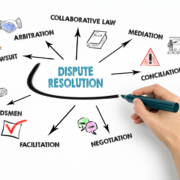
Fortunately, Florida also has a long history of developing and promoting Alternative Dispute Resolution in its legal framework. From encouraging mediation in Family Law to promoting the use of non-binding arbitration in circuit civil matters, ADR has provided a much-needed path for resolving matters that would have otherwise clogged the court system and prevented other cases from reaching a resolution through trial.

Now, more than ever, ADR is poised to play a critical role in managing case volumes for lawyers and Courts alike in Florida. With mandatory case management orders that allow little wiggle room for continuances or extensions, initial legal strategies now need to include a robust review of the potential value of Mediation and Arbitration in that particular case. Although conflict can be challenging, reaching a resolution while advocating for their clients is what lawyers do every day, and ADR is poised to help them do just that. While 2025 will undoubtedly bring challenges to many lawyers in Florida as they adjust to this new framework, with the tools of ADR at their disposal, there is nothing that they can’t handle.