Tag Archive for: property

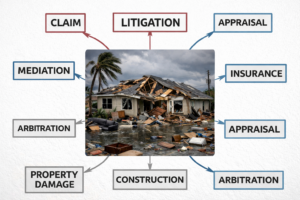
Florida’s first-party property litigation landscape has changed dramatically over the past few years. Pre-suit requirements are stricter, fee shifting has almost disappeared and summary judgment is elusive at best. These changes have altered one central question: When is the right time to mediate? Unfortunately, there is no universal answer. Timing now depends on leverage, risk tolerance, and how fully the factual record has developed.

Mediation Before Appraisal

In disputes where coverage is admitted but scope and pricing are contested, early mediation can still work. Particularly where both sides recognize that appraisal is inevitable, mediation can frame parameters and narrow issues before additional costs are incurred.

However, when causation is disputed, appraisal may not resolve the true conflict. As clarified in Johnson v. Nationwide Mutual Insurance Co., 828 So. 2d 1021 (Fla. 2002), coverage issues remain judicial questions. Mediation before those issues crystallize may result in positional bargaining rather than a meaningful risk analysis that could lead to settlement.

Strategic takeaway: Early mediation works best when the dispute is economic, not legal.

The DFS Mediation Program: An inexpensive and commonly misunderstood option

Florida’s Department of Financial Services administers a voluntary mediation program under §627.7015 for personal lines and commercial residential property insurance claims. It is available before appraisal or litigation, the insurer bears the cost, and insurers are required to notify policyholders of the program when a claim is filed. DFS mediation under §627.7015 is a voluntary option. What is mandatory is the pre-suit notice of intent to initiate litigation under §627.70152, which requires the claimant to file a notice with the DFS at least 10 business days before filing suit. A recent case notes that this notice of intent can also be retroactive. See generally Universal Property and Casualty v. Griffin, 51 Fla. L. Weekly D352B  (4th DCA 2026).  The insurer must respond in writing within that window, either with a settlement offer or a demand for appraisal. That is a notice-and-response requirement, not a mediation requirement.

The distinction matters strategically. In a DFS Mediation, if a settlement is reached, the policyholder has three business days to rescind assuming certain parameters are met. But the process is informal, conducted through DFS-appointed mediators, and designed to resolve disputes without adversarial proceedings. For straightforward scope-and-pricing disputes, particularly in personal residential claims, it can produce early resolution at minimal cost.

However, DFS mediation usually occurs before the factual record has been fully developed. There are usually no depositions, expert reports, and no litigation pressure driving the insurer’s evaluation. For complex claims or disputes involving causation, the program often lacks the information density needed for meaningful negotiation or resolution.

Strategic takeaway: DFS mediation is a useful early option for straightforward disputes, but counsel should not confuse it with a pre-suit requirement or treat it as a substitute for litigation-stage mediation in complex cases.

Mediation After Key Depositions

Adjuster, expert, corporate representative and claimant depositions frequently shift settlement value. When testimony clarifies claim handling decisions or exposes weaknesses in expert opinions, parties can reassess risk. Under Florida’s alignment with the federal summary judgment standard FRCP 1.510, trial risk has increased. A well-timed mediation after fact depositions but before expensive expert discovery often produces the most rational evaluation.

Strategic takeaway: Mediate when uncertainty narrows but before costs escalate.

Mediation During the Civil Remedy Notice Period

Section 624.155(3)(d) creates a 60-day cure window. As explained in Talat Enterprises, Inc. v. Aetna Casualty & Surety Co., 753 So. 2d 1278 (Fla. 2000), the insurer’s payment of contractual damages within that window can preclude a statutory bad faith action. Mediation during this window can be powerful. It allows both sides to explore resolution without committing to entrenched litigation strategy.

Strategic takeaway: CRN-period mediations require a fully developed factual presentation.

Post-Summary Judgment Hearing

The 2021 summary judgment standard has increased judicial willingness to resolve coverage disputes pre-trial. A pending dispositive motion often creates the sharpest settlement clarity. If the ruling defines the case’s trajectory, mediation immediately before the hearing can avoid unnecessary appellate risk. If the ruling will likely deny relief, mediation immediately can recalibrate expectations.

Strategic takeaway: Summary judgment deadlines create natural settlement inflection points.

The Economic Reality After Fee Reform

With the repeal of §627.428 through House Bill 837 (2023), both plaintiffs and carriers evaluate cases differently. Without one-way fees, plaintiffs must weigh litigation costs against potential net recovery. Carriers evaluate defense spending against exposure without automatic fee multipliers. This economic shift makes mediation more effective when both sides have concrete budgets and litigation forecasts, not speculative projections.

Strategic takeaway: Both sides need to understand their true economic impacts to make the most of mediation.

The Mediator’s Role in Timing

Timing is not merely procedural; it also has an economic and psychological impact. Early mediations often test credibility and assessment systems. Mid-case mediations test endurance. Late mediations test risk tolerance and trial strategies.

The most productive sessions occur when the parties understand their evidentiary strengths and weaknesses, the legal issues are framed but not conclusively decided, and litigation costs have become real but not yet irretrievable. In today’s Florida property litigation environment, mediation is most effective when it follows strategic development rather than procedural scheduling.

Conclusion

There is no universally “correct” moment to mediate a first-party property case. But there are clearly identifiable leverage points.

  • Early for economic disputes.
  • Mid-case for factual clarity.
  • Pre- or post-summary judgment for legal distinction.

Understanding those phases allows counsel to use mediation not as a docket event, but as a deliberate strategy.​​​​​​​​​​​​​​​​

Divorce is rarely a simple event, instead it is frequently a process with multiple twists and turns. In Florida, where equitable distribution and time-sharing statutes govern many outcomes, preparation is one of the best predictors of a fair, calm and efficient resolution. Whether you anticipate mediation, collaborative law, or believe litigation is necessary, taking practical steps before filing can protect your rights, clarify your priorities, and reduce unnecessary conflict. In this blog post, I will review some concepts to consider as you review your options regarding separation and divorce.

Understand Your Legal Framework

Florida is a no-fault divorce state, meaning that either spouse can seek dissolution on the grounds that the marriage is “irretrievably broken.” However, equitable distribution under Florida Statute § 61.075 and time-sharing arrangements under § 61.13 still require evidence and preparation. Before taking action, consider consulting with a Florida Family Law attorney and review with them what you may need to do. You can also consider some of the following concepts as you go through the process:

  • Review whether you meet the six-month residency requirement for filing.
  • Consult with a Florida family law attorney to understand options such as mediation, collaborative divorce, or traditional litigation.
  • Familiarize yourself with mandatory disclosure rules, including financial affidavits and discovery deadlines.
  • For additional information, you can review the Florida Bar Family Law Handbook at Florida Bar Family Law Handbook. You can also review Florida family law forms, including petitions, financial affidavits, and parenting plans, directly from the Florida Supreme Court at Florida Supreme Court – Family Law Forms.

Consider Collaborative Divorce

Collaborative divorce offers an alternative to courtroom litigation, focusing on resolution rather than confrontation. Under Florida’s Collaborative Law Process Act (Fla. Stat. §§ 61.55–61.58), both spouses commit to resolving their disputes respectfully and privately, with the help of trained professionals.

Key features include:

  • Each spouse retains a collaboratively trained attorney, and the parties jointly engage neutral professionals, such as a financial specialist and a mental health facilitator, to help guide discussions.
  • All participants sign a participation agreement, committing to full transparency and agreeing that if the process fails, both attorneys must withdraw before litigation begins.
  • This approach encourages open communication, minimizes hostility, and protects children from the adversarial nature of court proceedings.
  • For many Florida families, collaborative divorce blends the problem solving structure of mediation with the supportive framework of a multidisciplinary team, offering a path to closure that is both dignified and durable.

Gather and Organize Financial Information

Financial clarity is the backbone of every divorce case. Florida’s equitable distribution model divides marital assets and debts fairly, but not necessarily equally, based on documentation.

Concepts to Consider:

  • Two years of tax returns (federal and state)
  • Pay stubs, W-2s, or 1099s for both spouses
  • Bank, credit card, and investment statements
  • Retirement accounts, pensions, and life insurance policies
  • Mortgage documents, property appraisals, and titles
  • Business ownership records if self-employed or an entrepreneur
  • Household budget: current monthly income, expenses, and anticipated changes
  • Organizing these materials early reduces discovery disputes and provides for informed negotiation in mediation, collaborative sessions, or court.

Inventory Marital and Non-Marital Property

Under Florida law, property acquired during the marriage is typically marital, subject to division, unless proven otherwise. As you review the potential property, consider the following:

  • Real estate (homes, rental properties, land)
  • Vehicles, boats, or recreational assets
  • Jewelry, art, and collectibles
  • Inheritances or pre-marital assets (with documentation of ownership)
  • Keep copies of deeds, purchase receipts, and any prenuptial or postnuptial agreements that may affect ownership rights.

Parenting and Time-Sharing Plans

If children are involved, Florida courts require a Parenting Plan that details time-sharing, parental responsibilities, and communication. Before entering negotiations, it may be helpful to consider:

  • Outline a proposed schedule that considers school, extracurriculars, and holidays.
  • Document your role in daily care, education, and medical decisions.
  • Keep communication child-focused. Courts evaluate what is in the best interests of the child, not parental convenience.
  • Mediation and collaborative processes are often the best forums to craft cooperative parenting plans, reducing future litigation and emotional strain.

Safeguard Digital and Personal Privacy

In the digital era, your online presence can unintentionally affect your case. As you consider divorce, some items to review include:

  • Changing passwords and enabling two-factor authentication.
  • Review social media posts and set accounts to private.
  • Create a new email address for legal and financial correspondence.
  • Safely store digital copies of all relevant documents (encrypted or password-protected).

Address Immediate Financial and Living Arrangements

  • Determine how you will manage day-to-day logistics while the divorce is pending:
  • Open an individual bank account for your income.
  • Plan for temporary housing or shared-home arrangements.
  • Discuss temporary child support or spousal support with your attorney.
  • Avoid major financial moves (selling property, transferring assets) without legal guidance—these actions may be scrutinized under Florida’s automatic financial disclosure rules.

Build Your Support System

Divorce is both legal and emotional. There will be great days and tough days. It is helpful to have folks that understand you and can be there in a supportive manner. Consider assembling a personal and professional support team:

  • Attorney for legal guidance
  • Financial planner or CPA for tax and post-divorce planning
  • Therapist or counselor for emotional resilience
  • Trusted family or friends for practical support

Many clients find that early mediation or a collaborative process fosters a calmer, more constructive environment than adversarial proceedings, especially when guided by clear preparation and realistic expectations.

Plan for Life After Divorce

Preparation should not end when the judgment is entered or when the agreement is signed. If there are shared responsibilities, you may continue to have your ex-spouse in your life in one way or another for many years to come. It is helpful after the divorce to consider the following:

  • Update estate planning documents (this may include a will, power of attorney, healthcare surrogate, among others).
  • Review insurance beneficiaries and retirement accounts.
  • Establish a post-divorce budget that reflects new living expenses and financial goals.
  • Consider attending post-divorce mediation to address future parenting or support adjustments collaboratively.

Conclusion

A well-prepared client is an empowered client. By following a structured pre-divorce review of potential issues and concepts, and considering collaborative approaches, you reduce uncertainty, save time and legal costs, and preserve emotional bandwidth for what matters most: your future and your family. At Endeavor Mediation, we can help clients navigate these tough experiences in mediation with professionalism, neutrality, and compassion during efforts towards resolution.

When families face legal disputes, emotions run high, and tensions can escalate quickly. Whether dealing with divorce, child custody, or support issues, finding a resolution that benefits all parties involved is crucial. Mediation is an effective and often underutilized tool in Florida family law cases, offering a path to resolution that is less adversarial, more cost-effective, and ultimately beneficial for all involved.

What is Mediation?

Mediation is a voluntary, confidential process where a neutral third-party mediator helps disputing parties communicate and negotiate an agreement. Unlike litigation, which involves court proceedings and a judge’s ruling, mediation allows the parties to maintain control over the outcome and work collaboratively toward a mutually acceptable solution.

Why Mediation is Valuable in Family Law Cases

  1. Reduces Conflict and Promotes Cooperation

Traditional courtroom battles can be contentious, leading to prolonged stress and damaged relationships. Mediation fosters open dialogue, helping parties focus on problem-solving rather than blame. This cooperative approach is especially beneficial in cases involving children, where maintaining a working relationship between parents is essential for co-parenting.

  1. Cost-Effective Alternative to Litigation

Legal battles can be expensive, with attorney fees, court costs, and lengthy proceedings draining financial resources. Mediation is often significantly more affordable, as it typically requires fewer billable hours and avoids drawn-out court proceedings.

  1. Confidential and Private

Courtroom proceedings are public records, meaning sensitive family matters may become part of the public domain. Mediation, on the other hand, is a private process, allowing families to resolve disputes without public scrutiny.

  1. Empowers Parties to Make Their Own Decisions

Rather than having a judge impose a ruling, mediation allows the involved parties to craft an agreement tailored to their unique needs and circumstances. This sense of control often leads to greater satisfaction with the outcome and higher compliance rates with the agreed terms.

  1. Faster Resolutions

Court cases can drag on for months or even years, prolonging uncertainty and emotional distress. Mediation is typically much quicker, enabling families to move forward with their lives sooner rather than later.

  1. Preserves Family Relationships

Litigation can strain family ties, making it harder for parties to communicate after the case is resolved. Mediation encourages respectful dialogue, helping to preserve important family relationships, particularly between co-parents who will need to interact regarding their children.

Is Mediation Right for You?

Florida courts strongly encourage mediation in family law cases, and in many instances, it is a required step before proceeding to trial. The Florida Supreme Court has established rules governing mediation, ensuring a fair and structured process for all participants. Certified family law mediators in Florida are trained professionals who facilitate discussions, guide negotiations, and help families reach agreements that align with the state’s legal requirements.

Mediation is an excellent option for many family law disputes, but it is most effective when the parties are willing to cooperate. For most families, mediation provides a constructive and efficient way to resolve conflicts without the emotional and financial toll of litigation. If you’re facing a family law dispute in Florida, considering mediation could be the key to finding a peaceful, fair resolution. Consulting with a qualified mediator can help you determine whether this approach is the best fit for your unique situation. Mediation is a powerful tool in Florida family law cases, offering a less adversarial, more cost-effective, and emotionally supportive path to resolution. By promoting cooperation, protecting privacy, and empowering families to make their own decisions, mediation helps create lasting solutions that work for everyone involved. If you’re navigating a family legal dispute, exploring mediation could be the first step toward a more amicable future.